
Rhinoncus
Schoenherr, C.J., 1825
Species Guides
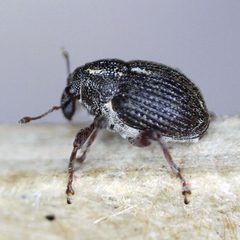
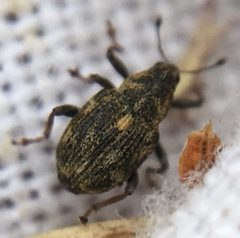
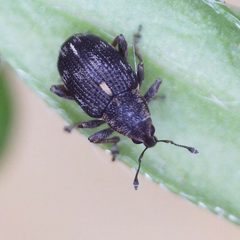
7Rhinoncus is a of weevils in the Curculionidae. feed on plants of the knotweed family Polygonaceae, including buckwheat (Fagopyrum spp.) and related plants. The genus includes multiple species distributed across Europe, Asia, and North America. One species, Rhinoncus sibiricus, has become a significant agricultural pest of buckwheat in China.
Pronunciation
How to pronounce Rhinoncus: //raɪˈnɒŋkəs//
These audio files are automatically generated. While they are not always 100% accurate, they are a good starting point.
Images
Habitat
Agricultural fields and natural where Polygonaceae plants occur. For R. sibiricus in China, moderately to highly suitable habitats occur in eastern and central Inner Mongolia, Shaanxi, northern Shanxi, southeastern Gansu, southern Ningxia, eastern Qinghai, and parts of Sichuan and Yunnan. hide in floral organs, rachis, and soil blocks.
Distribution
distributed across Europe (Denmark, Norway, Sweden), Asia (Russia, China, Japan, Korea, Mongolia), and North America (United States including Vermont). R. sibiricus specifically: native to eastern Russia (first reported 1952-1957), spread to Korea, Japan, Mongolia, and China; in China first reported 2013 in Chifeng, Inner Mongolia, now widely distributed across buckwheat planting regions.
Seasonality
R. sibiricus appear late May to early June. Damage occurs from germination to harvest, most serious from late June to mid-late August. Adults overwinter in soil.
Diet
feed on plants of the Polygonaceae. R. sibiricus: feed on leaf tissues and caulicles of buckwheat (Fagopyrum spp.); larvae burrow in stems and nodes. Also feeds on smartweed-buckwheat from accidentally sown Polygonaceae seeds.
Host Associations
- Fagopyrum esculentum - food sourcecommon buckwheat
- Fagopyrum tataricum - food sourceTartary buckwheat; preferred over F. esculentum
- Polygonaceae - food source-level association for
Life Cycle
R. sibiricus overwinters as in soil. Adults appear end of May to start of June. deposited in buckwheat stems. Larvae develop inside stems for approximately 30 days, burrowing in stems and nodes from first to sixth joint. occurs within stems. Complete timing not fully described.
Behavior
R. sibiricus is a rapidly spreading pest capable of damaging 100% of leaves in some years, leading to shoot death. Larval tunneling disrupts , causing plant lodging and reduced nectar secretion. can fly and darken quickly after .
Ecological Role
Agricultural pest. R. sibiricus caused significant reduction in buckwheat area in Russia from 30,000 hm² (1990-1995) to 3,000 hm² (2011). In China, destroyed 3666.67 hm² of buckwheat farmland in Chifeng, Inner Mongolia in 2013 alone. Causes 17-40% production loss through yield reduction; stem damage rates reach 67.7-92.5%.
Human Relevance
Significant economic impact on buckwheat . Future climate models predict northward shift in suitable , requiring adaptive management strategies. Research on R. sibiricus has been used to develop models for pest prediction.
More Details
Climate requirements for R. sibiricus
Survival probability threshold >0.3 requires: precipitation during wettest month 70.31-137.56 mm; mean temperature of coldest quarter -15.00 to 0.85°C; mean temperature of warmest quarter 11.88-23.16°C; precipitation during coldest quarter 0-24.39 mm. Main contributing factors (>70% to models) are precipitation during wettest month and coldest quarter, and mean temperature during warmest and coldest quarters.
Population dynamics
fluctuations in R. sibiricus are related to changes in temperature, humidity, and spatial distribution. Under future climate models, the center of the zone moves northward.
Sources and further reading
- BugGuide
- Wikipedia
- GBIF taxonomy match
- iNaturalist taxon
- NCBI Taxonomy
- Catalogue of Life
- Predicting potential distribution of the Rhinoncus sibiricus under climatic in China using MaxEnt
- Occurrence and Distribution of Rhinoncus sibiricus (Coleoptera: Curculionoidea) and Its Preference for Two Buckwheat Species in China