
Hypurus bertrandi
Perris, 1852
Portulaca leafmining weevil
Hypurus bertrandi is a small weevil in the Curculionidae, commonly known as the Portulaca leafmining weevil. The is native to the Palearctic region but has been introduced to North America and Hawaii. It is associated with plants in the Portulaca, where larvae create distinctive leaf mines. The species has been documented in iNaturalist with over 90 observations, indicating established in introduced ranges.
Pronunciation
How to pronounce Hypurus bertrandi: /hɪˈpjʊrəs bɛˈtrændi/
These audio files are automatically generated. While they are not always 100% accurate, they are a good starting point.
Identification
The combination of small size, weevil with an elongated rostrum, and association with Portulaca leaf mines distinguishes this from other weevils. The specific leaf mine pattern on Portulaca plants may aid in detection, though confirmation requires examination of specimens. Distinguished from native North American weevils by its introduced status and documented association.
Images
Appearance
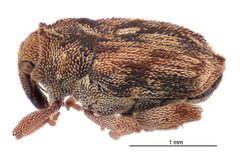
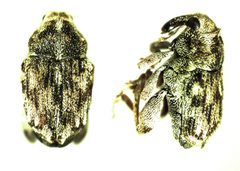
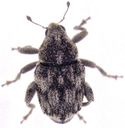
Small weevil with the characteristic elongated snout (rostrum) of Curculionidae. Body form is compact and typical of small leaf-mining weevils. Specific coloration and size details are not well documented in available sources.
Habitat
Associated with supporting Portulaca , which include disturbed ground, gardens, agricultural fields, and dry, sunny locations. The introduced in North America and Hawaii occur in similar anthropogenic habitats where plants are present.
Distribution
Native to the Palearctic region (documented from Terceira in the Azores). Introduced and established in North America and Hawaii, United States. Distribution closely follows the presence of cultivated and wild Portulaca .
Diet
Larvae feed internally within leaves of Portulaca , creating leaf mines. likely feed on Portulaca foliage, though specific adult feeding habits are not well documented.
Host Associations
- Portulaca - larval plantLeaf mining occurs in Portulaca leaves; specific Portulaca not documented in available sources
Life Cycle
Larval development occurs within leaf mines in Portulaca leaves. Complete with , larval, pupal, and stages. Specific timing and details of life stages are not documented in available sources.
Behavior
Larval involves mining between leaf surfaces of plants. behavior is not well documented beyond general weevil characteristics.
Ecological Role
As a , larvae may reduce photosynthetic capacity of Portulaca plants. Role in native range is not documented. In introduced ranges, it functions as a herbivore on non-native and cultivated Portulaca .
Human Relevance
Known as a pest of ornamental Portulaca (purslane) in gardens. The reflects its economic significance in horticulture. Not known to impact native or agriculture beyond ornamental plantings.
Similar Taxa
More Details
Introduction history
The was first described from Europe in 1852. Its presence in North America and Hawaii represents a human-mediated introduction, likely through horticultural trade of Portulaca plants. The iNaturalist observation count (90+) suggests it is readily detected by naturalists in its introduced range.