
Phrydiuchus
Gozis, M. des., 1885
Species Guides
1- Phrydiuchus tau(Mediterranean sage root weevil)
Phrydiuchus is a of true weevils (Curculionidae) comprising at least two described : P. tau and P. topiarius. Species in this genus are specialized herbivores associated with Salvia species (Lamiaceae), with documented use as agents against sage weeds. The genus is characterized by small, dark-colored weevils with distinctive markings.
Pronunciation
How to pronounce Phrydiuchus: //frɪˈdjuːkəs//
These audio files are automatically generated. While they are not always 100% accurate, they are a good starting point.
Identification
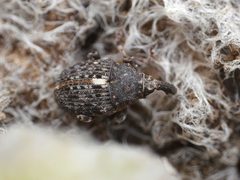
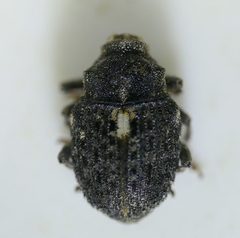
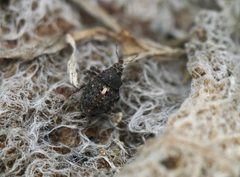
within Phrydiuchus are small weevils approximately 5 mm in length. P. tau is distinguished by a white T-shaped (tau) marking on the surface. P. topiarius lacks this marking and has been observed in association with different Salvia . Definitive identification to species requires examination of dorsal pattern and host association.
Images
Habitat
Associated with Salvia plants in open, disturbed, or semi-arid environments. P. tau occurs with Mediterranean sage (Salvia aethiopis) and clary sage (Salvia sclarea). P. topiarius is associated with Salvia verbenacea.
Distribution
Native to southern Eurasia. P. tau has been introduced and established in the western United States (Idaho and surrounding regions) for purposes.
Seasonality
P. topiarius has one per year (), with . P. tau adults are active during the growing season of their plants.
Diet
feed on foliage of Salvia . Larvae feed internally within plant tissues, mining stems and roots, with feeding concentrated at the root crown.
Host Associations
Life Cycle
P. topiarius: with one per year; laid at base or underside of leaves; larval in 3–4 weeks; larval mining into stems and roots; within plant; . P. tau: similar pattern with larval feeding at root crown causing significant plant damage.
Behavior
females oviposit at leaf bases or undersides. Larvae burrow into plant tissue and tunnel to root crown. Larval feeding causes greater damage than adult foliar feeding; small plants may be killed, larger plants stunted or rendered non-reproductive.
Ecological Role
Herbivore and agent. Larval feeding can suppress or kill Salvia plants, reducing competitive pressure in invaded .
Human Relevance
Used as agent against Salvia weeds, particularly Mediterranean sage in the western United States. First introduced to the U.S. in 1971.
Similar Taxa
- Other small Curculionidae associated with LamiaceaeSimilar size and general weevil ; distinguished by specificity, markings (in P. tau), and detailed examination of genitalia or molecular markers.
Sources and further reading
- BugGuide
- Wikipedia
- GBIF taxonomy match
- iNaturalist taxon
- NCBI Taxonomy
- Catalogue of Life
- Host Specificity Studies of Phrydiuchus topiarius and Phrydiuchus sp.1
- Life History of Phrydiuchus topiarius (Coleoptera: Curculionidae) on Salvia verbenacea (Labiatae)
- Bionomics of Phrydiuchus tau (Coleoptera: Curculionidae) Associated with Mediterranean Sage in Idaho