
Glocianus punctiger
(Gyllenhal, 1837)
Punctate Minute Seed Weevil
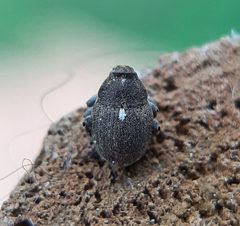
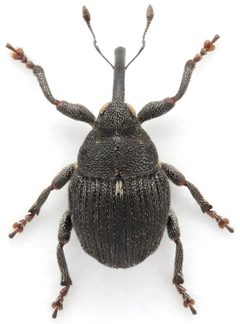
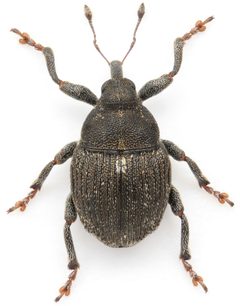
Glocianus punctiger is a minute seed weevil native to Europe. Larvae develop as internal borers in dandelion flower stalks, then feed on seeds within flowerheads before pupating underground in earthen . The forms a tritrophic association with dandelion (Taraxacum officinale) and its -larval Entedon costalis. It has been studied as an for urban fragmentation and land-use effects.
Pronunciation
How to pronounce Glocianus punctiger: //ɡloʊˈsaɪənəs ˈpʌŋktɪdʒər//
These audio files are automatically generated. While they are not always 100% accurate, they are a good starting point.
Images
Habitat
Grasslands and urban green spaces with dandelion (Taraxacum officinale) . Larvae inhabit internal tissues of dandelion flowering stems and flowerheads. occurs underground in earthen . availability is strongly limited by grassland mowing.
Distribution
Europe; documented in Kyiv, Ukraine.
Seasonality
activity coincides with dandelion flowering (mid-April onward). Larval feeding in flowerheads occurs through May. generally occurs at the end of May, coincident with dandelion seed .
Diet
Larvae feed initially as internal borers in dandelion flower stalks, then consume seeds within dandelion flowerheads. diet not documented in sources.
Host Associations
- Entedon costalis - -larval ; female lays egg into egg, first instar hatches within first instar host. rates of 21-25% observed.
- Taraxacum officinale - plantLarval development occurs in flowering stems and seed .
Life Cycle
laid in dandelion tissues. Larvae begin feeding as internal flower-stalk borers, transition to seed-eating within flowerheads. Mature larvae pupate underground in earthen , coinciding with dandelion seed . emerge the following spring.
Behavior
Larvae pupate underground in earthen . Both parasitized and unparasitized individuals exhibit this . Parasitized larvae are consumed by developing Entedon costalis larvae, which pupate 2–3 days later.
Ecological Role
Seed of dandelion. for Entedon costalis. Serves as environmental indicator for effects of fragmentation and anthropogenic land-use regimes on tritrophic interactions.
Human Relevance
Studied as a model organism for understanding urban dynamics and the effects of mowing and fragmentation on insect . No documented direct economic or agricultural impact.
More Details
Parasitoid biology
Entedon costalis is an -larval with complex developmental interactions including , siblicide, and immune response.
Urban ecology significance
In Kyiv, Ukraine, 9.1% of examined dandelion stems were infested by weevils; rates were negatively affected by anthropogenic barriers.
Sources and further reading
- BugGuide
- Wikipedia
- iNaturalist taxon
- NCBI Taxonomy
- Parasitism of Entedon costalis (Hymenoptera: Eulophidae) in Glocianus punctiger (Coleoptera: Curculionidae): an example of intentional discovery of the parasitoid-host association
- Tritrophic association on dandelion in a European capital city: a pilot quantitative study on the herbivore weevil Glocianus punctiger and its parasitoid wasp Entedon costalis