
Pseudobaris nigrina
(Say, 1832)
flower weevil
Pseudobaris nigrina is a of flower weevil in the Curculionidae. It is native to North America, with documented records from Ontario and Québec in Canada. The species was first described by Thomas Say in 1832. As a member of the flower weevil group, it is associated with flowering plants, though specific ecological details remain poorly documented.
Pronunciation
How to pronounce Pseudobaris nigrina: /ˌsuːdoʊˈbɛərɪs nɪˈɡraɪnə/
These audio files are automatically generated. While they are not always 100% accurate, they are a good starting point.
Identification
Distinguished from other Pseudobaris by subtle morphological features of the rostrum and ; precise identification requires examination of genitalia or reference to original description by Say (1832). The dark coloration suggested by the name "nigrina" may help separate it from lighter-colored .
Images
Appearance
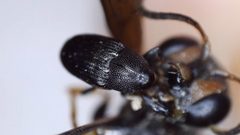
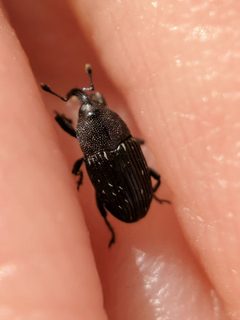
A small with the characteristic elongated snout (rostrum) of weevils. The specific epithet "nigrina" suggests dark or blackish coloration. Body form typical of Curculionidae with elbowed and compact body.
Habitat
Associated with flowering plants as indicated by its classification as a flower weevil. Specific preferences are not well documented.
Distribution
North America; confirmed records from Ontario and Québec, Canada. Broader distribution within North America likely but not precisely documented.
Ecological Role
Likely contributes to pollination or seed on flowering plants, as is common among flower weevils, though specific interactions have not been documented for this .
Similar Taxa
More Details
Taxonomic history
Originally described by Thomas Say in 1832, one of the earliest American entomologists. The has received limited modern study.
Data limitations
Despite 71 iNaturalist observations, published biological and ecological information for this remains sparse. Most aspects of its are inferred from -level characteristics rather than species-specific studies.