
Trichapion rostrum
baptisia seed pod weevil, wild indigo weevil
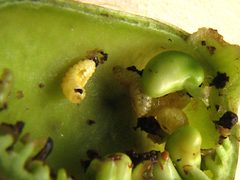
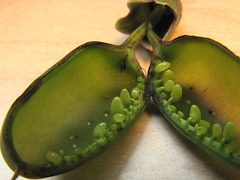
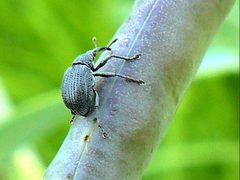
Trichapion rostrum is a weevil in the Brentidae, commonly known as the baptisia seed pod weevil or wild indigo weevil. are entirely black with an elongated rostrum bearing near its base. The species is tightly associated with wild indigo plants ( Baptisia), where females deposit in seed pods and larvae develop by feeding on seeds. Its seed can negatively impact plant .
Pronunciation
How to pronounce Trichapion rostrum: /ˌtrɪkəˈpaɪən ˈrɒstrəm/
These audio files are automatically generated. While they are not always 100% accurate, they are a good starting point.
Identification
Images
Appearance
are entirely black. The body features an elongated snout (rostrum) with attached near its base rather than at the tip.
Habitat
Associated with wild indigo (Baptisia) plants in where these legumes occur. Specific habitat types are not documented in available sources.
Distribution
Distribution details are not specified in available sources. Observations have been recorded in North America where Baptisia are native.
Diet
Larvae feed on seeds within Baptisia seed pods. feeding habits are not documented.
Host Associations
- Baptisia - deposition site and larval food sourceFemales deposit in seed pods; larvae feed on developing seeds
Life Cycle
Females deposit in seed pods of wild indigo plants. Larvae feed on seeds within the pods. and details are not documented.
Behavior
Females have been observed depositing specifically in seed pods of plants. Seed by larvae represents the primary documented behavioral interaction.
Ecological Role
Seed of Baptisia . Can adversely affect plant through seed consumption.
Similar Taxa
- Other BrentidaeShare the characteristic of attached to the rostrum base rather than the apex, distinguishing them from Curculionidae (true weevils) which have antennae
More Details
Taxonomic note
Formerly classified in Apionidae, now treated as Brentidae