
Apionini
Genus Guides
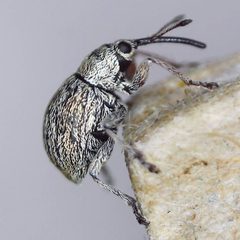
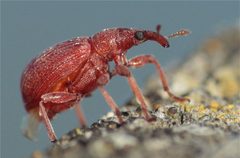
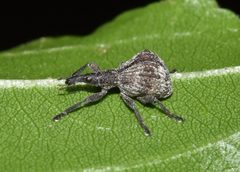
2Apionini is a tribe of small weevils within the Apioninae of the Brentidae. Members are characterized by their compact body form and association with flowering plants, particularly in the legume family Fabaceae. The tribe exhibits ancient co-diversification patterns with angiosperms, with some subtribes such as Oxystomatina showing specialized relationships. Brazilian representatives include such as Pygidiapion and Coelocephalapion, which develop in flower buds, seeds, or induce leaf galls on specific host plants.
Pronunciation
How to pronounce Apionini: /ˌæpiˈoʊnɪnaɪ/
These audio files are automatically generated. While they are not always 100% accurate, they are a good starting point.
Identification
Identification to tribe level requires examination of genitalic and wing venation characters. Males of some (e.g., Pygidiapion) possess distinctive rostral : two elongate longitudinal and punctate latero- grooves on the rostrum. Hind wings typically show reduced venation, including a small radial window. The is of the incomplete apionine type. Meso- and metatibiae are mucronate in many . Subtribal assignment relies on plant associations and detailed morphological characters; subtribe Oxystomatina is associated principally with the papilionoid group of Fabaceae.
Images
Distribution
distribution with highest diversity in tropical and subtropical regions. Documented from the Neotropical region including Brazil (Paraíba, Minas Gerais, São Paulo states).
Host Associations
- Fabaceae - larval development in flower budsPrincipal ; subtribe Oxystomatina associated principally with papilionoid group
- Pterocarpus violaceus - larval development in flower buds for Pygidiapion zeppelinii in Brazil
- Dalbergia foliolosa - larval development in flower buds for Pygidiapion zikani in Brazil
- Dalbergia spp. - larval development in flower buds-level association for Pygidiapion zikani
- Euphorbiaceae - larval development in seeds and leaf galls for some in subtribe Oxystomatina, including Coelocephalapion nodicorne species-group
- Croton glandulosus - larval development in seeds for Coelocephalapion paleariae in Brazil
- Croton antisyphiliticus - gall induction for Coelocephalapion geraldinhoi; weevil induces leaf galls
Life Cycle
Larval development occurs within plant tissues: in flower buds of Fabaceae (e.g., Pterocarpus, Dalbergia), in seeds of Euphorbiaceae (e.g., Croton glandulosus), or in leaf galls induced on Euphorbiaceae (e.g., Croton antisyphiliticus). Specific details of , pupal, and longevity are not documented in available sources.
Behavior
Some induce leaf galls on plants. Gall induction has been documented in the Coelocephalapion nodicorne species-group, where larvae develop within plant tissue galls rather than in reproductive structures.
Ecological Role
Pollen and seed in Fabaceae; gall-inducers in Euphorbiaceae. Interactions with plant defensive strategies including extrafloral have been suggested for gall-inducing . Ancient co-diversification with angiosperms indicates long-term evolutionary role in plant-insect associations.
Similar Taxa
- Apioninae (subfamily)Apionini is one of multiple tribes within Apioninae; distinguished by specific genitalic and wing characters combined with plant associations
- Oxystomatina (subtribe)A subtribe within Apionini; not a separate but a lower rank distinguished by association with papilionoid Fabaceae and specific morphological characters
More Details
Phylogenetic context
Molecular phylogenetic studies indicate ancient co-diversification of Apionini with flowering plants, with divergence patterns tracking angiosperm evolution.
Taxonomic note
The Apion has been split into multiple genera; formerly placed in Apion have been transferred to newer genera such as Pygidiapion based on detailed morphological and association data.
Sources and further reading
- BugGuide
- iNaturalist taxon
- Two new Brazilian species in the Coelocephalapion nodicorne species-group (Brentidae, Apioninae, Apionini, Oxystomatina) associated with Euphorbiaceae
- Timing and host plant associations in the evolution of the weevil tribe Apionini (Apioninae, Brentidae, Curculionoidea, Coleoptera) indicate an ancient co-diversification pattern of beetles and flowering plants
- Pygidiapion De Sousa & Mermudes, a new genus of Apioninae (Brentidae: Apioninae: Apionini) associated with Fabaceae from Brazil, with the description of a new species and transfer of Apion zikani Heller, 1922