
Oxystomatina
Schuurmans Stekhoven, 1935
Genus Guides
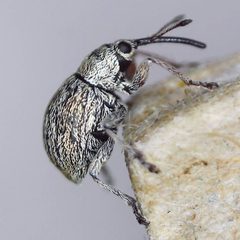
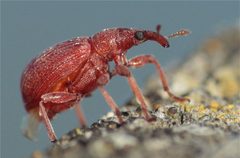
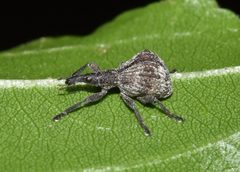
2Oxystomatina is a subtribe of weevils in the Brentidae ( Apioninae, tribe Apionini). Members are characterized by their association with Euphorbiaceae plants, with some inducing leaf galls or developing in seeds. The subtribe includes the Coelocephalapion, which contains species groups such as the C. nodicorne group found in Brazilian Cerrado .
Pronunciation
How to pronounce Oxystomatina: /ˌɒksɪstoʊˈmætɪnə/
These audio files are automatically generated. While they are not always 100% accurate, they are a good starting point.
Images
Habitat
Brazilian Cerrado; associated with Euphorbiaceae vegetation. Type localities for documented include Botucatu (São Paulo state) and Dores do Indaiá (Minas Gerais state).
Distribution
Brazil: São Paulo state, Minas Gerais state. Records based on type localities of constituent .
Host Associations
- Croton glandulosus L. - seed larval development in seeds; Coelocephalapion paleariae reared from this
- Croton antisyphiliticus Mart. - gall inducerleaf gall formation; Coelocephalapion geraldinhoi reared from leaf galls on this
Life Cycle
Larval development occurs within plant tissues: either seeds or leaf galls on Euphorbiaceae . Specific details on , pupal, or longevity not documented.
Behavior
Some induce leaf galls on plants. Gall induction represents a specialized plant-manipulation .
Misconceptions
The name Oxystomatina has been used for both an insect subtribe (Brentidae) and a (synonym of Oxystomina). These are unrelated in different .
More Details
Taxonomic homonymy
Oxystomatina Schuurmans Stekhoven, 1935 is a homonym: valid as a subtribe of weevils (Brentidae), but also published as a now synonymized under Oxystomina. The insect usage follows iNaturalist and recent Brentidae literature; the nematode usage appears in older taxonomic catalogues.
Host plant specificity
Documented in the subtribe show strong association with Euphorbiaceae, specifically Croton species. This specificity may characterize the subtribe, though broader sampling is needed.