
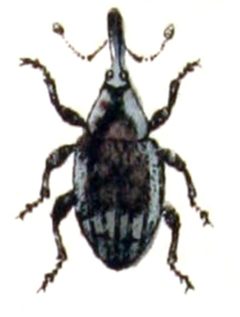
Grypus equiseti
(Fabricius, 1775)
horsetail weevil
Grypus equiseti is a weevil native to Europe that feeds exclusively on horsetail plants (Equisetum spp.). It has been introduced to New Zealand as a agent targeting field horsetail (Equisetum arvense), an weed in that country. The species is notable for its specialized diet and documented success in programs.
Pronunciation
How to pronounce Grypus equiseti: //ˈɡrɪpəs ɛˈkwɪsɪtaɪ//
These audio files are automatically generated. While they are not always 100% accurate, they are a good starting point.
Identification
As a member of Brachyceridae (formerly often placed in Curculionidae or Erirhinidae), this possesses the elongated snout (rostrum) characteristic of weevils. Specific diagnostic features distinguishing it from other weevils are not documented in available sources.
Images
Habitat
Associated with stands of Equisetum arvense and Equisetum palustre; found in moist where these horsetail grow, including wetlands, riverbanks, and disturbed areas.
Distribution
Native to Europe; introduced and established in New Zealand for purposes. GBIF records indicate presence in the Holarctic region and North America, though these may represent introductions or misidentifications requiring verification.
Diet
Feeds on Equisetum arvense (field horsetail) and Equisetum palustre (marsh horsetail). Larval development occurs within horsetail tissues.
Host Associations
- Equisetum arvense - food plantprimary ; in New Zealand where weevil was introduced for control
- Equisetum palustre - food plantnative European
Ecological Role
Herbivore specializing on Equisetum ; in New Zealand, functions as a agent reducing of field horsetail.
Human Relevance
Used in : intentionally introduced to New Zealand to manage Equisetum arvense, an plant. This represents a documented case of successful or ongoing weed biocontrol using a specialized herbivorous insect.
Similar Taxa
- Other Brachyceridae/Erirhinidae weevils placement varies in literature; related weevils may share general but differ in specificity and geographic range
More Details
Taxonomic Uncertainty
placement varies across sources: treated as Brachyceridae in Catalogue of Life and GBIF, as Erirhinidae in NCBI, and historically as Curculionidae in some treatments. This reflects ongoing revision of weevil higher classification.
Biological Control History
Introduction to New Zealand represents a documented case of intentional release for weed control, though specific details of release date, establishment success, and impacts are not provided in available sources.