
Auletobius cassandrae
Voss, 1922
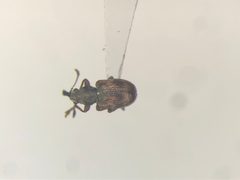
Auletobius cassandrae is a leaf-rolling weevil in the Attelabidae, first described by Voss in 1922. It is native to eastern North America and is known to feed exclusively on the leaves of sweetfern (Comptonia peregrina), a nitrogen-fixing shrub in the bayberry family. The belongs to a characterized by leaf-rolling used to create protected chambers for -laying and larval development.
Pronunciation
How to pronounce Auletobius cassandrae: /aʊˌlɛtoʊˈbiəs kəˈsændri/
These audio files are automatically generated. While they are not always 100% accurate, they are a good starting point.
Identification
Auletobius cassandrae can be distinguished from other Auletobius by its association with Comptonia peregrina; plant specificity is a key identification cue in this . The species is small-bodied with the compact, rounded form typical of attelabid weevils, featuring a short, broad rostrum and elbowed . Detailed morphological characters require examination of male genitalia or other microscopic features not documented in available sources.
Images
Habitat
Occurs in where Comptonia peregrina grows, including dry sandy or rocky soils, forest edges, clearings, and recently disturbed areas. Sweetfern thrives in poor, acidic soils and is common in pine-oak barrens, burned-over woodlands, and roadsides in northeastern North America.
Distribution
Recorded from eastern Canada (New Brunswick, Newfoundland, Nova Scotia, Ontario) with presence in North America generally. The distribution corresponds to the range of its plant Comptonia peregrina, which extends from Newfoundland west to Ontario and south to North Carolina.
Diet
feed on leaves of Comptonia peregrina (sweetfern).
Host Associations
- Comptonia peregrina - plantsole documented food source for
Life Cycle
Females roll leaves of Comptonia peregrina to form protective chambers (leaf rolls) in which are deposited and larvae develop. This is characteristic of the Attelabidae .
Behavior
Exhibits leaf-rolling : females cut and manipulate plant leaves to create cylindrical or spiral rolls that serve as larval nurseries. The rolls protect developing larvae from desiccation and .
Ecological Role
Functions as a herbivore with limited impact on plant . The leaf-rolling creates temporary microhabitats that may be used by other small after weevil larvae depart.
Human Relevance
No documented economic or agricultural significance. Occasionally encountered by botanists and naturalists working in sweetfern .
Similar Taxa
- Other Auletobius speciesConvergent and leaf-rolling ; distinguished primarily by plant associations and subtle morphological details
- Deporaus spp.Similar leaf-rolling weevils in related attelabid ; differ in rostrum shape and plant preferences
More Details
Taxonomic note
The was described by German entomologist Edmund Voss in 1922. The specific epithet 'cassandrae' etymology is not documented in available sources.