
Deporaus
Samouelle, 1819
leaf and bud weevils, leaf-rolling weevils
Species Guides
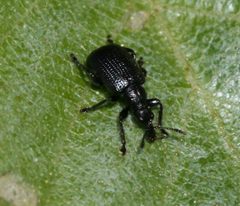
1- Deporaus glastinus(leaf rolling weevil)
Deporaus is a of leaf and bud weevils in the Attelabidae, containing over 200 described . Species in this genus exhibit characteristic leaf-rolling , where females cut and roll leaf blades to create protective structures for laying and larval development. The genus shows considerable plant diversity, with species associated with temperate deciduous trees (birch, hornbeam, hazel) and tropical/subtropical fruit trees (mango, cashew). Larvae typically develop within leaf rolls or excavated leaf cavities, then pupate in soil.
Pronunciation
How to pronounce Deporaus: //dɛˈpɔːraʊs//
These audio files are automatically generated. While they are not always 100% accurate, they are a good starting point.
Identification
Deporaus can be distinguished from other Attelabidae by the combination of leaf-rolling or leaf-cutting and associated morphological adaptations. Females possess elongated rostra (snouts) used for cutting and manipulating leaf material. is present in some species, with females larger than males and possessing relatively larger snouts. Specific species-level identification requires examination of genitalia and detailed morphological characters not consistently documented across the .
Images
Habitat
Temperate deciduous forests and tropical/subtropical agricultural systems. occur on trees including birch (Betula pendula), hornbeam (Carpinus betulus), hazel (Corylus avellana), mango (Mangifera indica), and cashew (Anacardium occidentale). Larval development occurs in leaf rolls or excavated cavities; occurs in soil.
Distribution
Widespread across Europe, Asia, and introduced regions. Documented from Czech Republic, Denmark, and throughout South and Southeast Asia including India (Gujarat, Kerala, Maharashtra, Uttar Pradesh, West Bengal, Bihar, Andhra Pradesh), Bangladesh, Bhutan, Myanmar, China (Guangxi, Yunnan), Nepal, Pakistan, Thailand, Malaysia, and the Andaman Islands.
Seasonality
activity varies by and climate. Temperate species: adults occur on trees from late April to early July, with sporadic later appearances. Tropical species: year-round activity with tied to host plant ; specific timing varies by region.
Diet
Larvae feed on leaf tissue within constructed rolls or excavated cavities. feed on leaves of plants, causing scraping and cutting damage.
Host Associations
- Betula pendula - primary leaf rolls constructed, laid inside
- Carpinus betulus - primary leaf rolls constructed, slightly fewer per roll than on birch
- Mangifera indica - primary young leaves used for oviposition via excavated cavities
- Anacardium occidentale - cashew, per cited literature
- Alnus glutinosa -
- Corylus avellana -
- Fagus sylvatica -
- Quercus petraea -
- Tilia cordata -
- Tilia platyphyllos -
Life Cycle
Complete with soil-dwelling pupal stage. : approximately 2 days in tropical . Larva: three instars, development period 9–10 days in tropical species; 3–4 months from egg to soil departure in temperate species. Pupa: soil , approximately 8 days in tropical species. : sexually dimorphic in some species, with females larger and possessing larger snouts. Larvae and pupae hibernate in soil in temperate species.
Behavior
Females exhibit specialized leaf manipulation : cutting leaf blades and rolling them into protective structures (temperate ) or excavating cavities parallel to the midrib (tropical species). Females demonstrate behavioral consistency in roll size regardless of leaf dimensions. Leaf cutting behavior in some species occurs after oviposition. exit leaves to pupate in soil.
Ecological Role
Herbivore that reduces plant photosynthetic area through leaf rolling and feeding damage. Host trees may exhibit partial compensatory growth in neighboring undamaged leaves. Some are agricultural pests of mango and cashew.
Human Relevance
Several are significant agricultural pests. Deporaus marginatus and D. marginellus damage mango crops through leaf scraping, cutting, and rolling that reduce photosynthetic capacity and can affect fruit production. Deporaus betulae causes minor damage to birch and hornbeam in forestry contexts. Understanding female leaf-cutting behavior informs implementation of preventative and curative management measures.
Similar Taxa
- Attelabidae (other genera)Other leaf-rolling weevil share -level characteristics but differ in specific leaf manipulation , associations, and geographic distribution
- RhynchitinaeRelated within Curculionoidea with some leaf-rolling , but distinct in morphological and behavioral details
Sources and further reading
- BugGuide
- Wikipedia
- GBIF taxonomy match
- iNaturalist taxon
- NCBI Taxonomy
- Catalogue of Life
- Deporaus marginellus . [Distribution map].
- Biology of Mango Leaf Cutting Weevil <i>Deporaus marginatus</i> Pascoe
- A contribution to the knowledge of biology and harmfulness of Deporaus betulae (L.) (Coleoptera, Attelabidae)
- Biology, morphology and seasonal population dynamics of mango leaf cutting weevil, Deporaus marginatus (Pascoe) (Coleoptera: Attelabidae)