
Eurymycter tricarinatus
Pierce, 1930
fungus weevil
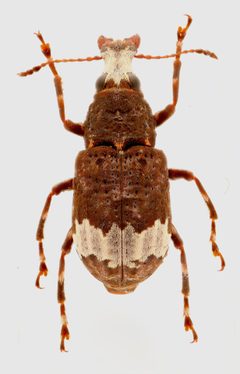
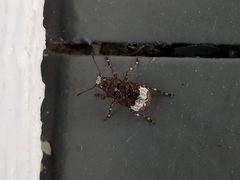
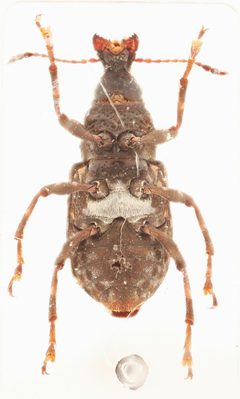
Eurymycter tricarinatus is a of fungus weevil in the Anthribidae, first described by Pierce in 1930. It is one of approximately 20 species in the Eurymycter, a group of small weevils associated with fungal substrates. The species has been documented across North America with confirmed records in Ontario and Québec, Canada. As a member of Anthribidae, it lacks the elongated snout characteristic of true weevils in Curculionidae.
Pronunciation
How to pronounce Eurymycter tricarinatus: /ˌjʊə.raɪˈmɪk.tər ˌtraɪ.kæ.rɪˈneɪ.təs/
These audio files are automatically generated. While they are not always 100% accurate, they are a good starting point.
Identification
The specific epithet "tricarinatus" refers to three keels or ridges, likely on the or pronotum, though detailed morphological descriptions are not readily available in the provided sources. in Eurymycter are generally small, compact weevils with relatively short, broad rostrums compared to other weevil . Definitive identification requires examination of genitalic characters and comparison with .
Images
Distribution
North America, with confirmed records in Ontario and Québec, Canada. The full extent of its range within the United States is not well documented in available sources.
Ecological Role
As a fungus weevil, likely contributes to decomposition processes through association with fungal substrates, though specific ecological functions are not documented.
Similar Taxa
- Eurymycter speciesOther members of the share similar size, body form, and preferences; identification to level requires detailed examination of surface sculpturing and male genitalia.
- Curculionidae (true weevils)Superficially similar but distinguished by Anthribidae's short, broad rostrum with straight versus the elongated snout and geniculate antennae of true weevils.
More Details
Nomenclatural Status
Listed as "provisionally accepted" in Catalogue of Life, indicating some taxonomic uncertainty that may warrant further revisionary study.
Observation Frequency
iNaturalist records 60 observations, suggesting it is encountered with moderate frequency by naturalists but remains poorly documented in formal literature.