
Silvanus unidentatus
(Olivier, 1790)
Silvanus unidentatus is a small bark-dwelling in the Silvanidae, measuring 2.3–2.8 mm. Native to the Palaearctic region across 33 countries plus Korea, it has been introduced to North America and Chile. The inhabits the space beneath tightly attached bark of dead broadleaved trees, where both larvae and develop. It has been the subject of sequencing research, yielding a -level assembly of 187.15 Mb.
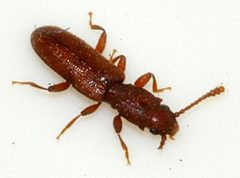
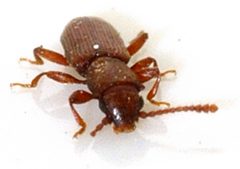
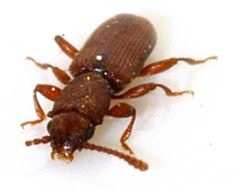
Pronunciation
How to pronounce Silvanus unidentatus: /sɪlˈvænəs ˌjuːnɪdɛnˈteɪtəs/
These audio files are automatically generated. While they are not always 100% accurate, they are a good starting point.
Images
Habitat
Under tightly attached bark of dead broadleaved trees; occasionally found on coniferous trees. Associated with forested areas and isolated dead trees.
Distribution
Native to the Palaearctic across 33 countries plus Korea. Introduced and established in North America and Chile. In Britain: very local in northern England and Wales, absent from Scotland and Ireland, relatively abundant in southern England southeast of a line from Severn Estuary to The Wash.
Seasonality
present throughout the year.
Diet
Fungal growth within bark ; fungal spores found in intestines indicate fungi as the likely food source.
Life Cycle
Larvae and develop beneath bark of dead trees.
Behavior
Runs actively when bark is disturbed. Frequently found in association with Uleiota planata.
Human Relevance
Subject of sequencing research; -level assembly published with 11,364 protein-coding genes identified.
Similar Taxa
- Uleiota planataOften found together with S. unidentatus beneath bark; both are silvanid beetles sharing similar preferences.