
Taphroscelidia linearis
(LeConte, 1863)
Round Passandrid
Taphroscelidia linearis is a of in the Passandridae, commonly known as the Round Passandrid. It is found across North America, the Caribbean, and Middle America. The species was first described by LeConte in 1863. As a member of Passandridae, it belongs to a family of small beetles that are primarily associated with stored products and wood-boring insects, often living as or commensals in the galleries of other beetles.
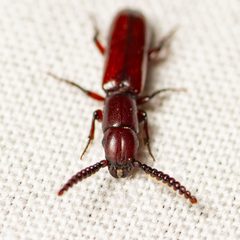
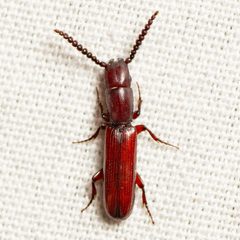
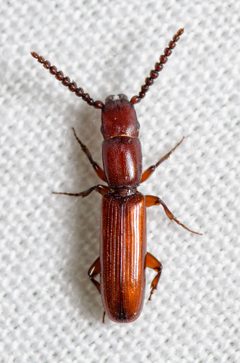
Pronunciation
How to pronounce Taphroscelidia linearis: /ˌtæf.roʊ.skəˈlɪd.i.ə lɪˈnɛə.rɪs/
These audio files are automatically generated. While they are not always 100% accurate, they are a good starting point.
Images
Distribution
North America, Caribbean, and Middle America. Specific locality records are sparse in the provided sources, but GBIF indicates presence across these broad regions.
More Details
Taxonomic placement
Taphroscelidia linearis is classified in the Passandridae, a small family of beetles in the superfamily Cucujoidea. Passandrids are often referred to as 'parasitic flat bark beetles' and are known for their associations with wood-boring beetles, particularly in the families Buprestidae and Cerambycidae.
iNaturalist observations
As of the source date, there were 187 iNaturalist observations for this , indicating it is documented with some frequency by citizen scientists, though detailed biological information remains limited in publicly available sources.