
Prometopia sexmaculata
(Say, 1825)
Six-spotted Sap Beetle
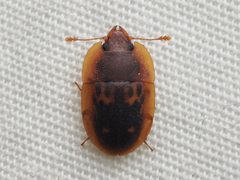
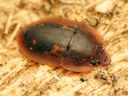
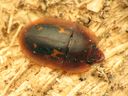
Prometopia sexmaculata is a sap-feeding beetle in the Nitidulidae, commonly known as the Six-spotted Sap Beetle. The is found in North America, with records from Ontario, Québec, and Vermont. are attracted to fermenting sap and decaying plant matter.
Pronunciation
How to pronounce Prometopia sexmaculata: /proʊmɛˈtoʊpiə sɛksmaːˈkjʊlətə/
These audio files are automatically generated. While they are not always 100% accurate, they are a good starting point.
Identification
The specific epithet "sexmaculata" (six-spotted) suggests six distinct maculations or spots on the , though detailed morphological descriptions are not available in the provided sources. As a member of Nitidulidae, it likely has the -characteristic short, clubbed with three-segmented clubs and broadly oval to elongate body shape.
Images
Habitat
Associated with sap flows and decaying plant material typical of nitidulid beetles. Specific microhabitat details for this are not documented.
Distribution
North America. Documented from Ontario and Québec in Canada, and Vermont in the United States.
Diet
Sap-feeding, as indicated by placement and . feed on fermenting plant sap and associated microorganisms.
Ecological Role
Contributes to decomposition of plant matter and nutrient cycling through sap-feeding activities. May facilitate microbial in sap flow environments.
More Details
Taxonomic Note
The was described by Thomas Say in 1825. The Prometopia is part of the sap beetle Nitidulidae, a group characterized by their association with fermenting or decaying plant materials.