
Nitidula rufipes
(Linnaeus, 1767)
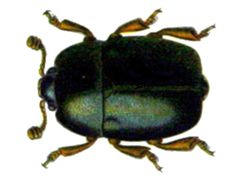
Nitidula rufipes is a sap beetle in the Nitidulidae with worldwide distribution. It colonizes carcasses during active and advanced decay stages, making it significant in for estimating minimum postmortem intervals. Laboratory studies have established its complete temperature-dependent development from to between 16-34°C.
Pronunciation
How to pronounce Nitidula rufipes: /nɪˈtɪdʊlə ˈruːfɪˌpɛs/
These audio files are automatically generated. While they are not always 100% accurate, they are a good starting point.
Images
Habitat
Carrion; active and advanced decay stages of carcasses; stored products; soil for
Distribution
Europe and Northern Asia (excluding China); North America; in China (recorded from pig carcasses in Ningxia)
Diet
Carrion and rotten animal tissues; fermented plant material; flowers; plant sap; fungi; oats and minced lean pork in laboratory conditions
Life Cycle
Complete : → larva (three instars) → post-feeding larva → pupa → . Developmental duration ranges from 71.0±4.4 days at 16°C to 20.8±2.4 days at 34°C. Lower developmental threshold 9.65°C; thermal summation constant 471.40 degree days. occurs in soil. Adults undergo 2-5 day hardening period after , changing from white to yellow to brown to dark black before emerging.
Behavior
Post-feeding larvae leave food source and become stationary in crouched shape before . remain in pupal chamber during hardening and do not emerge immediately after .
Ecological Role
Forensic for estimating postmortem interval in late decomposition stages; ; agricultural and storage pest; of pathogenic microorganisms
Human Relevance
Significant in for criminal investigations; used to estimate minimum postmortem interval based on developmental stage and temperature data; agricultural pest affecting stored products and crops
Sources and further reading
- BugGuide
- Wikipedia
- GBIF taxonomy match
- iNaturalist taxon
- NCBI Taxonomy
- Meloidae Holdings | Entomology Research Museum
- Vanquished vanishing columbines: Columbine sawfly, Pristiphora rufipes — Bug of the Week
- Bug Eric: Beetles from Bones
- The Lepidopteran Life Aquatic
- The Changing Distributions of our Grasshoppers, Crickets and Relatives - Buglife Blog - Buglife
- And the winner is… | Beetles In The Bush
- Temperature-Dependent Development of Nitidula rufipes (Linnaeus, 1767) (Coleoptera: Nitidulidae) and Its Significance in Estimating Minimum Postmortem Interval.