
Languriini
Hope, 1840
Lizard Beetles
Genus Guides
4- Acropteroxys(slender lizard beetle)
- Dasydactylus
- Languria(lizard beetles)
- Langurites(lizard beetles)
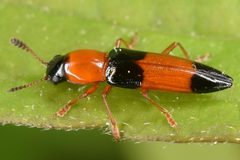
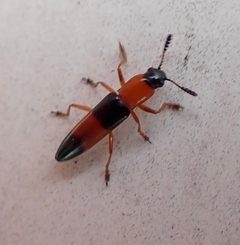
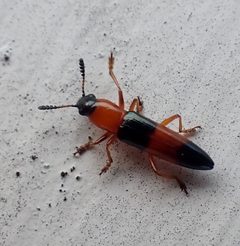
Languriini is a tribe of lizard in the Erotylidae containing approximately 5 and at least 20 described . are typically found on leaves and flowers, where they feed on pollen. Larvae are stem borers that tunnel into living but decaying stems, branches, or twigs of various plants, with documented associations spanning 18 plant families. The tribe is distributed across the Oriental, Palearctic, Afrotropical, and Australian regions. Some species are considered agricultural pests, particularly in palm and bamboo .
Pronunciation
How to pronounce Languriini: /læŋˈɡjʊərɪˌaɪniː/
These audio files are automatically generated. While they are not always 100% accurate, they are a good starting point.
Identification
are generally long and parallel-sided with a red or reddish . Body length ranges from small to medium (approximately 5–10 mm). typically have an elongate-oval terminal antennomere. The pronotum shape varies by and sex; males of some genera exhibit more strongly convex and broadly rounded pronotum. Terminal tarsomere is distinctly broadened apically in some genera such as Serralanguria. Most are glabrous or nearly so, lacking metallic luster.
Images
Habitat
occur on leaves and flowers of plants. Larvae inhabit decaying pith within living stems, branches, or twigs of monocot and dicot plants. Forested mountain landscapes at elevations of 800–1000 m have been documented for some in southern China.
Distribution
Oriental, Palearctic, Afrotropical, and Australian regions. Specific documented localities include China (Guangdong, Guangxi, Hainan), Taiwan, Malaysia, India (Assam), Philippines, and Malaya Peninsula.
Diet
Larvae feed on decaying pith of monocot and dicot plants. feed on pollen.
Host Associations
- Arecaceae (palms) - larval 9 , 22 including Areca, Arenga, Calamus, Caryota, Cocos, Phoenix, Trachycarpus, Livistona, Elaeis
- Poaceae (bamboos and grasses) - larval 13 , 21 including Bambusa, Dendrocalamus, Gigantochloa, Phyllostachys, Pleioblastus, Pseudosasa, Sasa, Schizostachyum, Sinocalamus, Thysanolaena, Arundo, Miscanthus, Phragmites
- Zingiberaceae - larval Alpinia, Hedychium
- Musaceae - larval Musa
- Orchidaceae - larval Dendrobium, Phalaenopsis
- Adoxaceae - larval Sambucus chinensis (documented for Tetraphala collaris in Taiwan)
- Pteridaceae - larval Pteris wallichiana (documented for Tetraphala sp. in Taiwan)
- Asteraceae - larval Artemisia, Chrysanthemum, Dendranthema
- Lamiaceae - larval Leonurus
- Fabaceae - larval Dalbergia, Pueraria
- Rutaceae - larval Citrus
- Rosaceae - larval Rosa
- Araceae - larval Colocasia, Cyrtosperma
- Cyperaceae - larval Cyperus
- Lythraceae - larval Lagerstroemia
- Malvaceae - larval Hibiscus
- Menispermaceae - larval Tinospora
- Moraceae - larval Ficus
- Myrtaceae - larval Psidium
- Vitaceae - larval Vitis
Life Cycle
Females excavate living leafstalks and stems using their to create oviposition holes. are deposited inside or near these holes. Early-instar larvae remain near oviposition sites; late-instar larvae tunnel deeper into stems and feed on decaying pith. occurs within the plant tunnels. emerge and disperse to flowers. Multiple per year are possible in tropical and subtropical regions.
Behavior
Larvae are specialized stem borers, tunneling into living but decaying plant tissue. Females use their to excavate oviposition sites in leafstalks and stems. actively forage on flowers for pollen. Some show strong preference for specific plant , particularly palms and bamboos.
Ecological Role
Larvae function as decomposers of decaying pith in live stems, facilitating nutrient cycling in palm and bamboo . may serve as through pollen-feeding . Some are agricultural pests in cultivated palms and bamboos.
Human Relevance
Some are agricultural pests in palm and bamboo . The tribe contains both economically damaging species and potentially with restricted associations.
Sources and further reading
- BugGuide
- Wikipedia
- iNaturalist taxon
- Catalogue of Life
- Larval host plants of two lizard beetles in the genus Tetraphala (Coleoptera, Erotylidae, Languriinae, Languriini) from Taiwan, with a host plant list of Languriini
- Serralanguria, a new genus of Languriini (Coleoptera, Erotylidae) from the Oriental Region, including one new species and one species transferred from the genus Languria.