
Pediacus depressus
(Herbst, 1797)
flat bark beetle
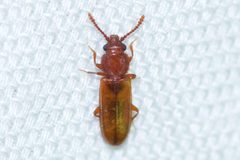
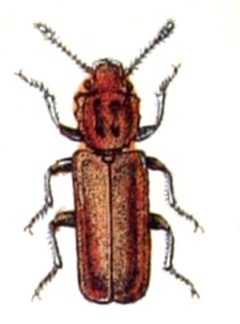
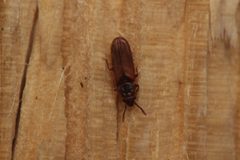
Pediacus depressus is a of flat bark beetle in the Cucujidae. It is distributed across Europe and Northern Asia, excluding China. The species was first described by Herbst in 1797 (or 1794 in some sources) under the name Colydium depressum. As a member of the flat bark beetles, it is adapted to living under bark and in similar concealed .
Pronunciation
How to pronounce Pediacus depressus: /ˈpɛdiˌækʊs dɪˈprɛsəs/
These audio files are automatically generated. While they are not always 100% accurate, they are a good starting point.
Identification
Specific diagnostic features for distinguishing P. depressus from are not documented in available sources. The name "depressus" refers to a flattened body form typical of the . Identification to species level likely requires examination of genitalic structures and other subtle morphological characters.
Images
Habitat
As a flat bark beetle, P. depressus is associated with dead wood and bark . Specific microhabitat preferences within this general ecological zone are not documented.
Distribution
Europe and Northern Asia (excluding China). Specific country records include Belgium.
Similar Taxa
- Other Pediacus species within the Pediacus share the flattened body form and bark-dwelling habits, requiring detailed morphological examination for separation
- Other CucujidaeMembers of the flat bark beetle share similar flattened body adaptations for living under bark
More Details
Sources and further reading
- BugGuide
- Wikipedia
- GBIF taxonomy match
- iNaturalist taxon
- NCBI Taxonomy
- Catalogue of Life
- Publications | Entomology Research Museum
- Oobius-depressus - Entomology Today
- Insects, DNA, and Pathogen Extracts Available to Borrow From NEON Biorepository
- longhorned beetles | Beetles In The Bush | Page 10
- Parasitoid Wasp Makes a Comeback after 101 Years