
Cartodere nodifer
(Westwood, 1839)
Swollen Fungus Beetle, minute brown scavenger beetle
Cartodere nodifer is a minute beetle in the Latridiidae, commonly known as the Swollen . The was originally described from Europe but has become through human-mediated . It is now established on multiple continents including Australia, New Zealand, and the Azores archipelago. The species belongs to a group commonly called 'minute brown scavenger beetles' due to their small size and ecological habits.
Pronunciation
How to pronounce Cartodere nodifer: /kɑːrˈtoʊdɛre ˈnoʊdɪfər/
These audio files are automatically generated. While they are not always 100% accurate, they are a good starting point.
Identification
Minute brown beetles in Latridiidae require microscopic examination for -level identification. Cartodere nodifer is distinguished from other Cartodere species by structural features including the nodifer character. Identification to level possible by small size (under 3mm), compact body form, and association with fungal substrates.
Images
Appearance
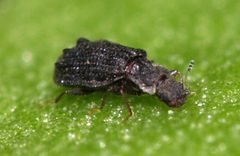
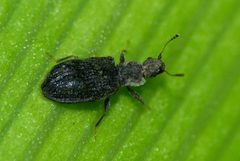
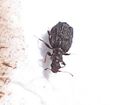
Minute beetle, typical of the Latridiidae. Body brown, compact. Specific morphological features distinguishing this from include the characteristic 'nodifer' (node-bearing) structure referenced in the species epithet, though detailed descriptions require examination of microscopic features.
Habitat
Associated with fungal substrates; found in environments where decaying organic matter and mold growth occur. Established in the Azores suggest ability to colonize oceanic island environments with suitable microhabitats.
Distribution
distribution following human-mediated spread. Native to Europe; established in Australia, New Zealand, and the Azores (records from Faial, Flores, Graciosa, Pico, and São Jorge islands).
Diet
Feeds on fungal growth; specific dietary details not documented in sources
Ecological Role
Decomposer; contributes to nutrient cycling through consumption of fungal in decaying organic matter
Human Relevance
distribution indicates human-mediated , likely through transport of goods and materials. Not documented as a pest of economic significance.
Similar Taxa
- Other Cartodere speciesRequire microscopic examination of genitalia and other structural features for reliable separation
- Other Latridiidae generaMinute brown scavenger beetles share similar size, coloration, and preferences; -level identification requires examination of antennal club structure and pronotal features
More Details
Taxonomic note
Sources conflict regarding native range: Wikipedia states Australia and New Zealand as native, while iNaturalist summary indicates European origin. The distribution and Westwood's 1839 description from European material support European origin with subsequent introduction to southern hemisphere and oceanic islands.
Azorean records
GBIF distribution records from five islands in the Azores archipelago (Faial, Flores, Graciosa, Pico, São Jorge) indicate established insular , likely introduced.