
Migneauxia
Jacquelin du Val, 1858
Species Guides
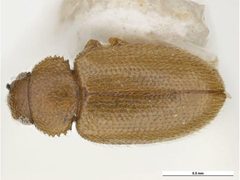
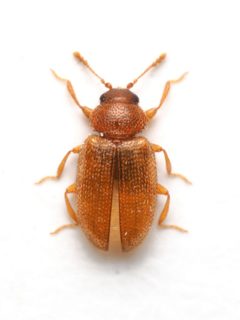
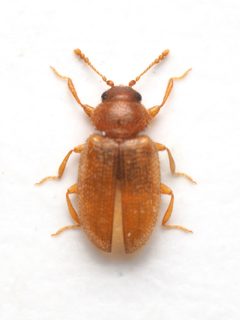
1Migneauxia is a of small beetles in the Latridiidae, commonly known as plaster beetles or minute brown scavenger beetles. The genus was established by Jacquelin du Val in 1858 and currently includes eleven described distributed across Europe and other regions. Members of this genus are associated with moist, decaying organic matter and fungal .
Pronunciation
How to pronounce Migneauxia: /mɪɡˈniːksɪə/
These audio files are automatically generated. While they are not always 100% accurate, they are a good starting point.
Identification
within Migneauxia are distinguished from related latridiid primarily by subtle differences in elytral , body proportions, and male genitalia. The genus contains both larger-bodied species (e.g., M. grandis) and smaller, more compact forms. Accurate identification to species level generally requires examination of microscopic characters and dissection of male specimens.
Images
Habitat
in this inhabit environments with abundant fungal growth, including decaying plant matter, compost, leaf litter, and moist stored products. They are typically found in humid microhabitats where mold and fungal spores develop.
Distribution
Documented from Denmark, Norway, and Sweden; broader distribution likely includes much of Europe given the presence of widespread such as M. crassiuscula and M. psammeticha. Individual species show varying ranges, with some restricted to specific regions.
Similar Taxa
- LatridiusAnother in Latridiidae with similar small, oval body form and elytral striation; distinguished by differences in antennal club structure and pronotal shape
- EnicmusOverlaps in preference and general appearance; Migneauxia tend to have more convex body profiles and different elytral punctation patterns
More Details
Taxonomic history
The has undergone significant revision, with many transferred in or out as concepts of generic limits in Latridiidae were refined. Johnson (2006-2007) described multiple new species, indicating ongoing taxonomic work.