
Corticarina
Reitter, 1880
Species Guides
4- Corticarina cavicollis
- Corticarina fuscula
- Corticarina longipennis
- Corticarina minuta(Minute plaster beetle)
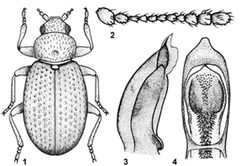
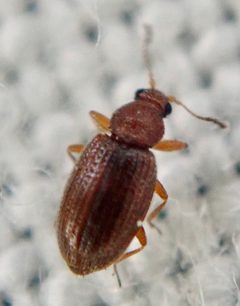
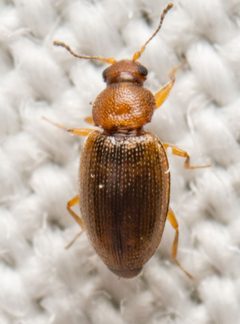
Corticarina is a of minute brown scavenger beetles in the Latridiidae. Members are characterized by eleven-segmented with three clubbed segments, a smooth lateral margin of the pronotum, and a fovea on the pronotal disc near the basal margin. The genus was established by Reitter in 1880.
Pronunciation
How to pronounce Corticarina: //kɔrˌtɪkəˈraɪnə//
These audio files are automatically generated. While they are not always 100% accurate, they are a good starting point.
Identification
Distinguished from other Latridiidae by the combination of: eleven-segmented with three clubbed segments (not two), smooth lateral pronotal margin (lacking the toothed or serrated edges seen in some related genera), and presence of a pronotal fovea near the base. These characters together separate Corticarina from morphologically similar genera such as Cortinicara and Latridius.
Images
Appearance
Small beetles with eleven-segmented ; the three terminal segments are enlarged to form a club. The pronotum has a smooth lateral margin without teeth or serrations. A distinct fovea (shallow depression) is present on the pronotal disc, positioned close to the basal margin.
Distribution
Recorded from Denmark (DK), Norway (NO), and Sweden (SE).
Similar Taxa
- CortinicaraSimilar body form and preferences; distinguished by with two clubbed segments rather than three, and different pronotal sculpturing.
- LatridiusOverlaps in size and general appearance; separated by pronotal margin structure and antennal club segmentation.
More Details
Taxonomic history
The was described by Edmund Reitter in 1880. -level within Corticarina remains under revision, with many species historically difficult to distinguish based on external alone.