
Lycoperdininae
Bromhead, 1838
Genus Guides
3- Aphorista(handsome fungus beetles)
- Lycoperdina(handsome fungus beetles)
- Mycetina(handsome fungus beetles)
Lycoperdininae is a of beetles within the Endomychidae, established by Bromhead in 1838. Members of this subfamily are commonly known as handsome fungus beetles, sharing this with the broader family. The subfamily includes such as *Lycoperdina*, *Endomychus*, and *Eumorphus*. These beetles are associated with fungal substrates and are primarily found in tropical and subtropical regions.
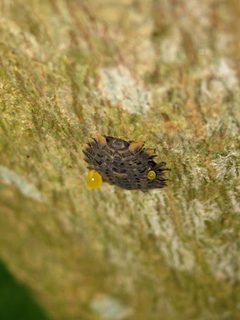
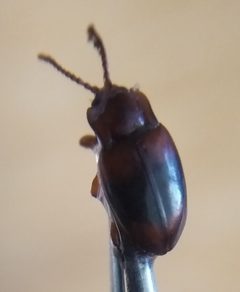
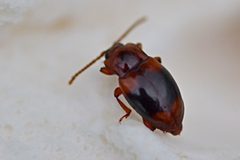
Pronunciation
How to pronounce Lycoperdininae: /ˌlaɪkoʊpərˈdɪnɪni/
These audio files are automatically generated. While they are not always 100% accurate, they are a good starting point.
Identification
Lycoperdininae can be distinguished from other Endomychidae by their generally convex, rounded body form and often brightly patterned or metallic coloration. Members typically have short, clubbed with a compact three-segmented club. The pronotum is usually broad and may cover much of the from above. Many exhibit contrasting color patterns of red, orange, or yellow with black markings.
Images
Habitat
in this are primarily found in moist, decaying organic matter where fungi grow, including rotting wood, leaf litter, and compost. They are strongly associated with fruiting bodies of basidiomycete fungi, on which they feed and breed. Tropical forest support the greatest diversity, though some species extend into temperate regions.
Distribution
The has a predominantly tropical and subtropical distribution, with highest diversity in Southeast Asia, Africa, and the Neotropics. Some , such as *Lycoperdina*, occur in the Palearctic region including Europe and northern Asia.
Seasonality
Activity patterns vary by climate; in tropical regions, may be found year-round, while temperate show peak activity during warmer months when fungal fruiting bodies are abundant.
Diet
Feeds on fungal tissues, particularly the spores and of basidiomycete mushrooms and bracket fungi. Some have been observed feeding on slime molds (Myxomycetes).
Life Cycle
Larvae develop within or upon fungal substrates, feeding directly on the fungus. occurs in the vicinity of the food source. The is closely tied to the ephemeral nature of fungal fruiting bodies.
Behavior
are often found aggregated on fungal fruiting bodies, particularly during periods of spore release. Many are capable of and are attracted to light. When disturbed, some species exhibit (death-feigning).
Ecological Role
As fungivores, members of this contribute to nutrient cycling by consuming and fragmenting fungal tissues. They may also serve as agents for fungal spores through their feeding and movement activities.
Human Relevance
Generally of no direct economic importance. Occasionally found in mushroom facilities where they may be considered minor pests. Some brightly colored are collected for entomological study and photography.
Similar Taxa
- EupsilobiinaeAnother Endomychidae ; distinguished by more elongate body form and less compact antennal club
- StenotarsinaeEndomychidae with generally larger size and different pronotal structure; often with more subdued coloration
- CoccinellidaeSuperficially similar convex, rounded beetles with bright coloration; distinguished by different antennal structure (shorter, less distinctly clubbed in Endomychidae) and tarsal formula
More Details
Taxonomic note
The classification of Endomychidae has undergone revision; Lycoperdininae has been variously treated as a tribe or subtribe in some historical treatments. The current circumscription includes formerly placed in related groups.
Observation data
iNaturalist records indicate substantial citizen science documentation of this , with over 7,700 observations contributing to distribution and data.