
Hyperaspis connectens
(Thunberg, 1808)
connected lady, Confluent Sigil Lady Beetle
Hyperaspis connectens, commonly known as the connected lady or Confluent Sigil Lady Beetle, is a small lady beetle in the Coccinellidae. measure approximately 2.3–3 mm in length. The ranges from the southern United States through Central America and the Caribbean Islands to northern South America. Like other members of the Hyperaspis, it is a specialized of scale insects.
Pronunciation
How to pronounce Hyperaspis connectens: /haɪˈpɛrəsˌpɪs kəˈnɛktɛnz/
These audio files are automatically generated. While they are not always 100% accurate, they are a good starting point.
Identification
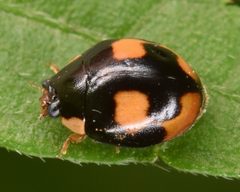
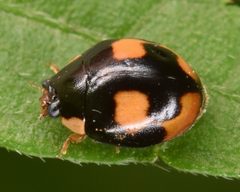
Distinguished from other small lady beetles by the combination of black body, yellow , and two large yellow spots on the . The pronotum pattern—yellow with half black—is distinctive. May be confused with other Hyperaspis ; spot configuration and pronotum markings help separate species.
Images
Appearance
are small, measuring 2.3–3 mm in length. The body is black with a yellow . The pronotum is yellow with the half black. The bear two large yellow spots.
Distribution
Southern United States south through Central America and the Caribbean Islands to northern South America. Specific country records include the United States and Colombia.
Ecological Role
Member of Hyperaspis, which are specialized of scale insects (Coccidae, Diaspididae). Larvae and feed on scale insects and their . Likely contributes to of in its range.
Human Relevance
Beneficial insect for potential of insect pests. No negative impacts reported.
Similar Taxa
- Hyperaspis spp.Other in the same share similar small size, black coloration with spots or stripes, and predatory habits on scale insects. Spot number and pattern, as well as pronotum markings, distinguish species.
- Other small CoccinellidaeMany lady beetles are small and spotted. The specific pattern of two large yellow elytral spots combined with yellow and partially black pronotum helps distinguish H. connectens.