Hippodamia quindecimmaculata
Mulsant, 1850
Scarce Convergent Ladybeetle
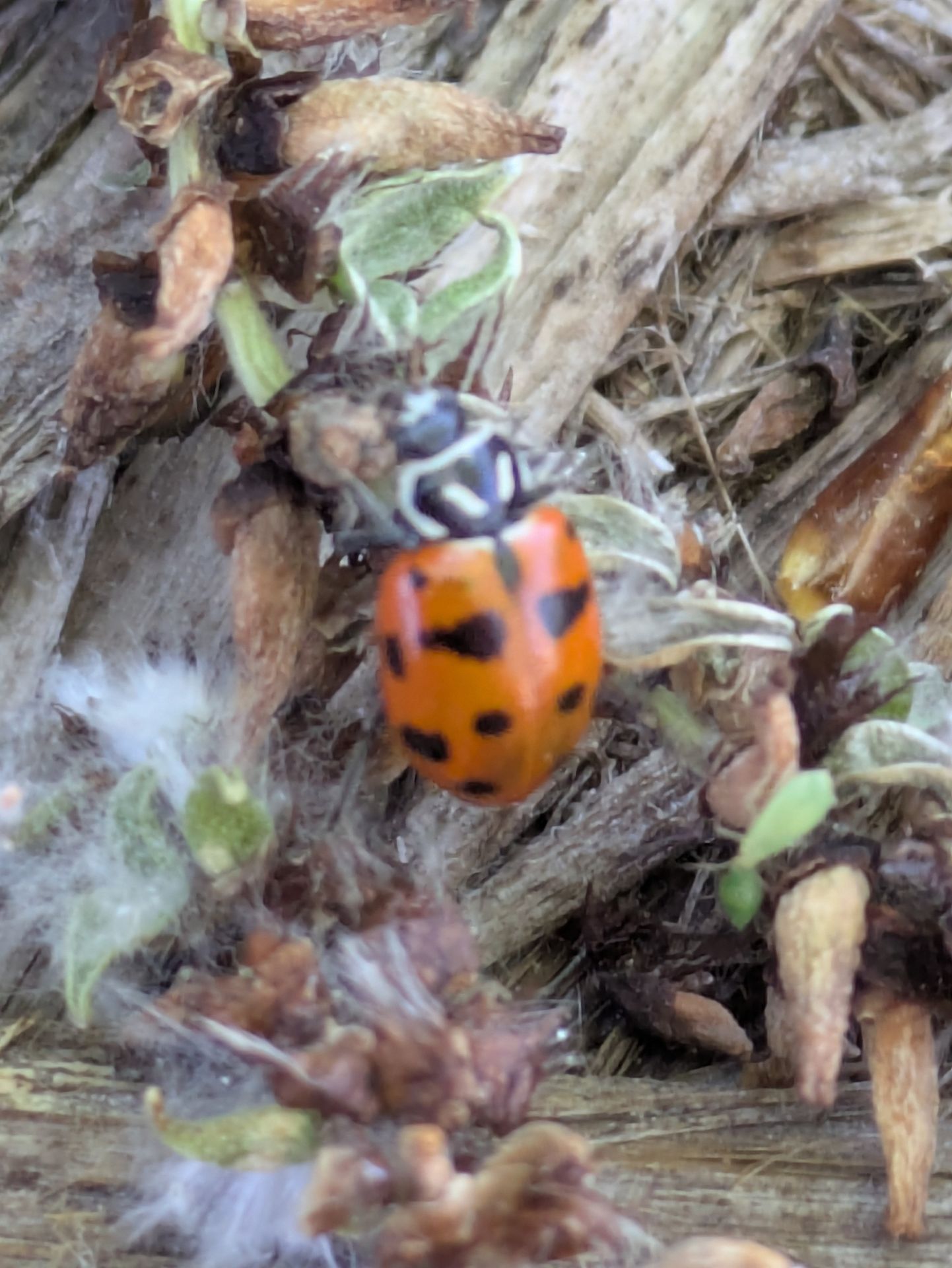
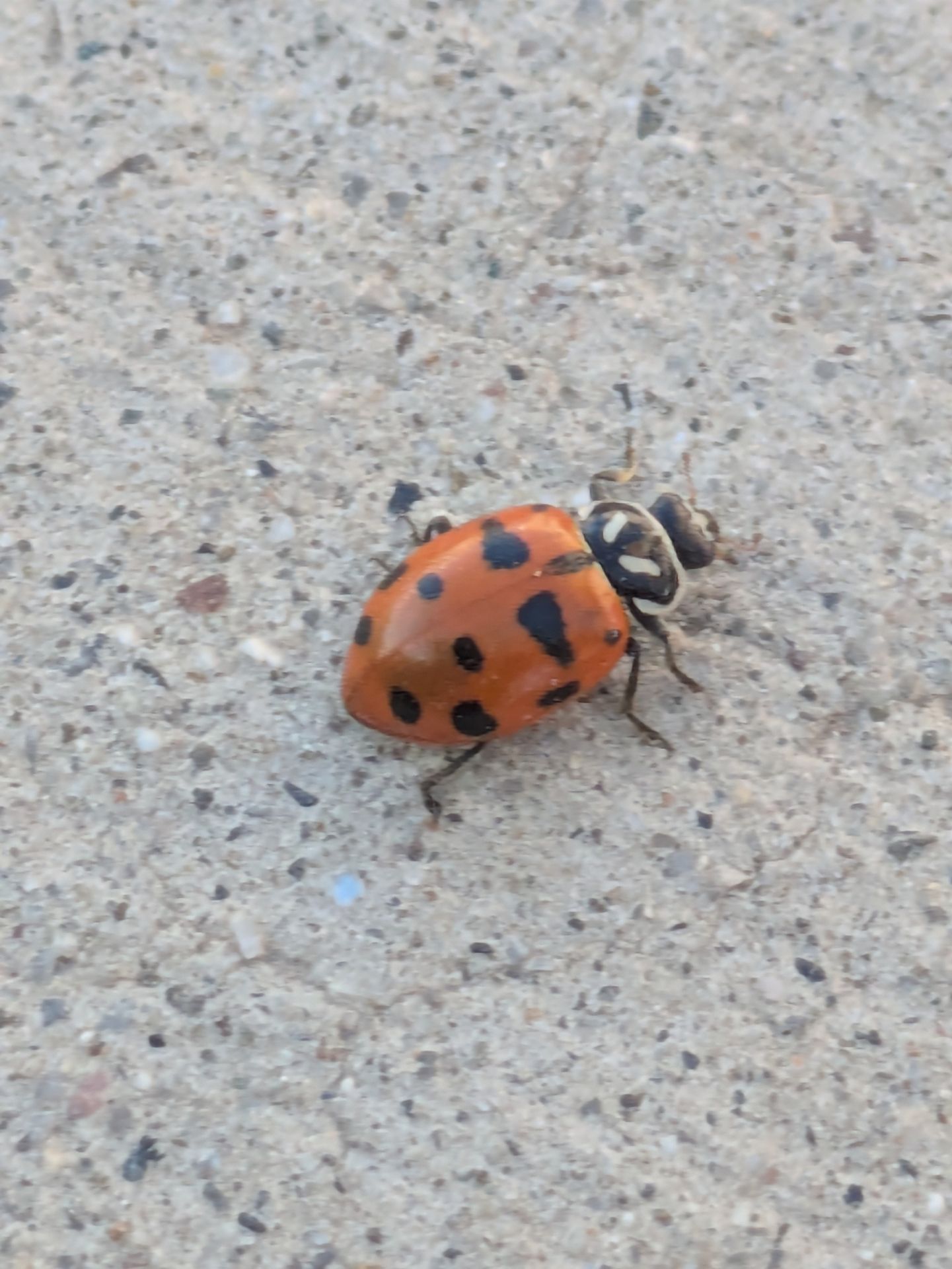
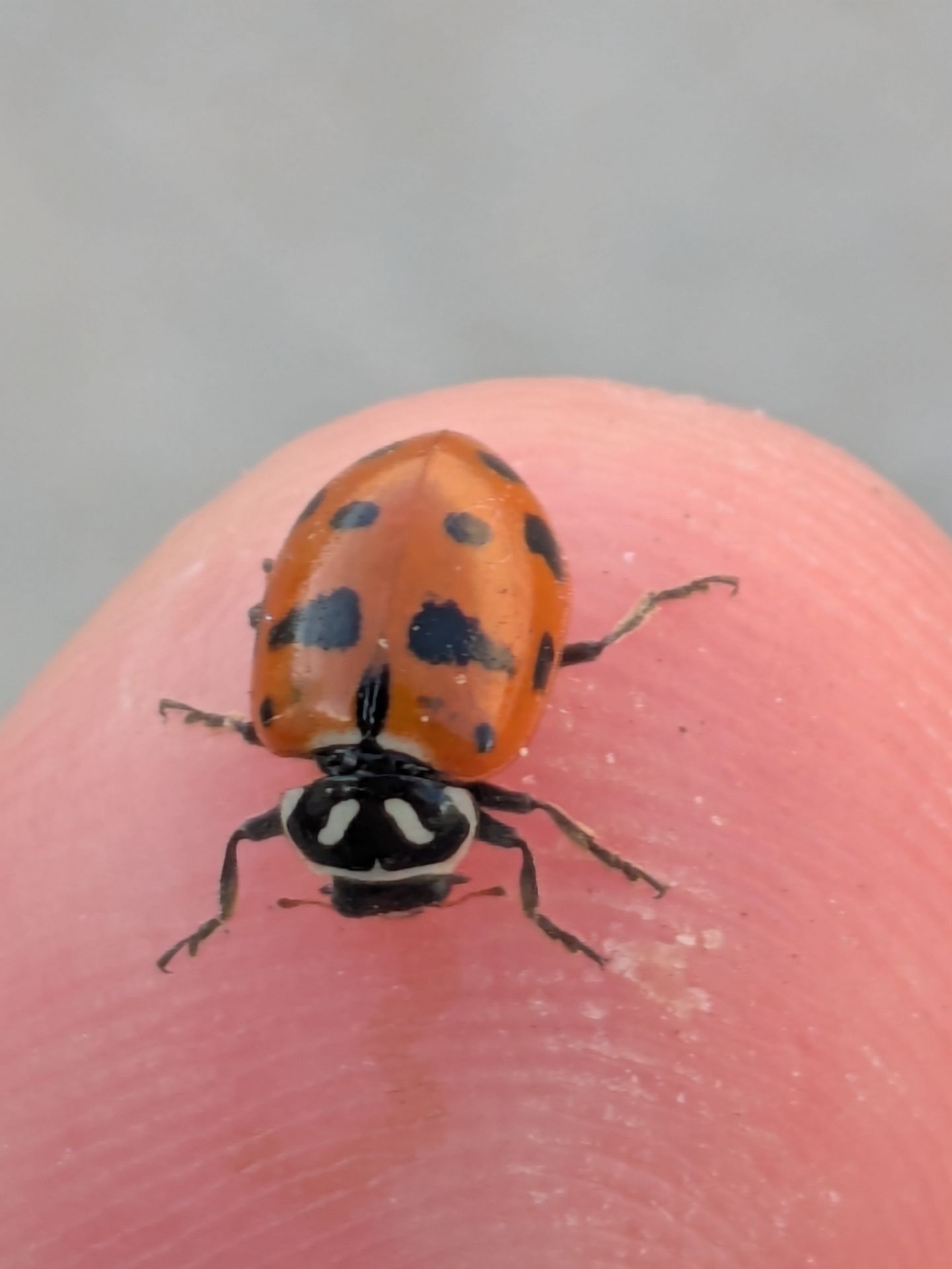
Hippodamia quindecimmaculata is a small lady beetle in the Coccinellidae, measuring 5-7 mm in length. It is characterized by pale spots on the pronotum and heavily maculate (spotted) . The species has a limited known distribution in North America, with records from Ontario, Saskatchewan, and several midwestern and southern U.S. states including Illinois, Iowa, Louisiana, Missouri, Nebraska, Ohio, Oklahoma, and Wisconsin. It appears to be relatively uncommon, with few documented observations.
Pronunciation
How to pronounce Hippodamia quindecimmaculata: /ˌhɪpoʊˈdeɪmiə ˌkwɪndesɪməˈkjuːlɑːtə/
These audio files are automatically generated. While they are not always 100% accurate, they are a good starting point.
Identification
Distinguished from other Hippodamia by the combination of pale spots on the pronotum and heavily maculate . The specific spot pattern—implied by the species name suggesting approximately fifteen spots—differs from the more familiar convergent lady beetle (H. convergens), which has converging white lines on the pronotum rather than discrete pale spots. Accurate identification likely requires examination of spot arrangement and pronotal pattern details.
Images
Distribution
North America. Documented from Ontario and Saskatchewan in Canada; in the United States from Illinois, Iowa, Louisiana, Missouri, Nebraska, Ohio, Oklahoma, and Wisconsin. The patchy distribution pattern suggests either genuine rarity or undercollection.
Similar Taxa
- Hippodamia convergens (Convergent Lady Beetle)Similar size and general appearance, but H. convergens has characteristic converging white lines on the pronotum rather than discrete pale spots, and typically has fewer, larger elytral spots arranged in a different pattern.
More Details
Rarity
The 'Scarce Convergent Ladybeetle' and low observation count (7 records on iNaturalist as of source date) suggest this is genuinely uncommon or has a restricted range compared to the widespread and abundant H. convergens.
Taxonomic Note
The was described by Mulsant in 1850, placing it among the earlier-described members of the Hippodamia.
Sources and further reading
- BugGuide
- Wikipedia
- GBIF taxonomy match
- iNaturalist taxon
- Birds, Bats or a Bloom? But No Splat! | Bug Squad
- Looking for Lygus | Bug Squad
- All Hail the Lady Beetles! | Bug Squad
- Researchers Share New Method for Detecting Insect Egg Predators
- Bacteria Can Aid Aphids Against Predation and Parasitism
- From Burglars to Bugs: Anti-Theft Dye Useful in Insect-Tracking Studies