Harmonia quadripunctata
(Pontoppidan, 1763)
cream-streaked lady beetle, four-spot ladybird, four-spot lady beetle
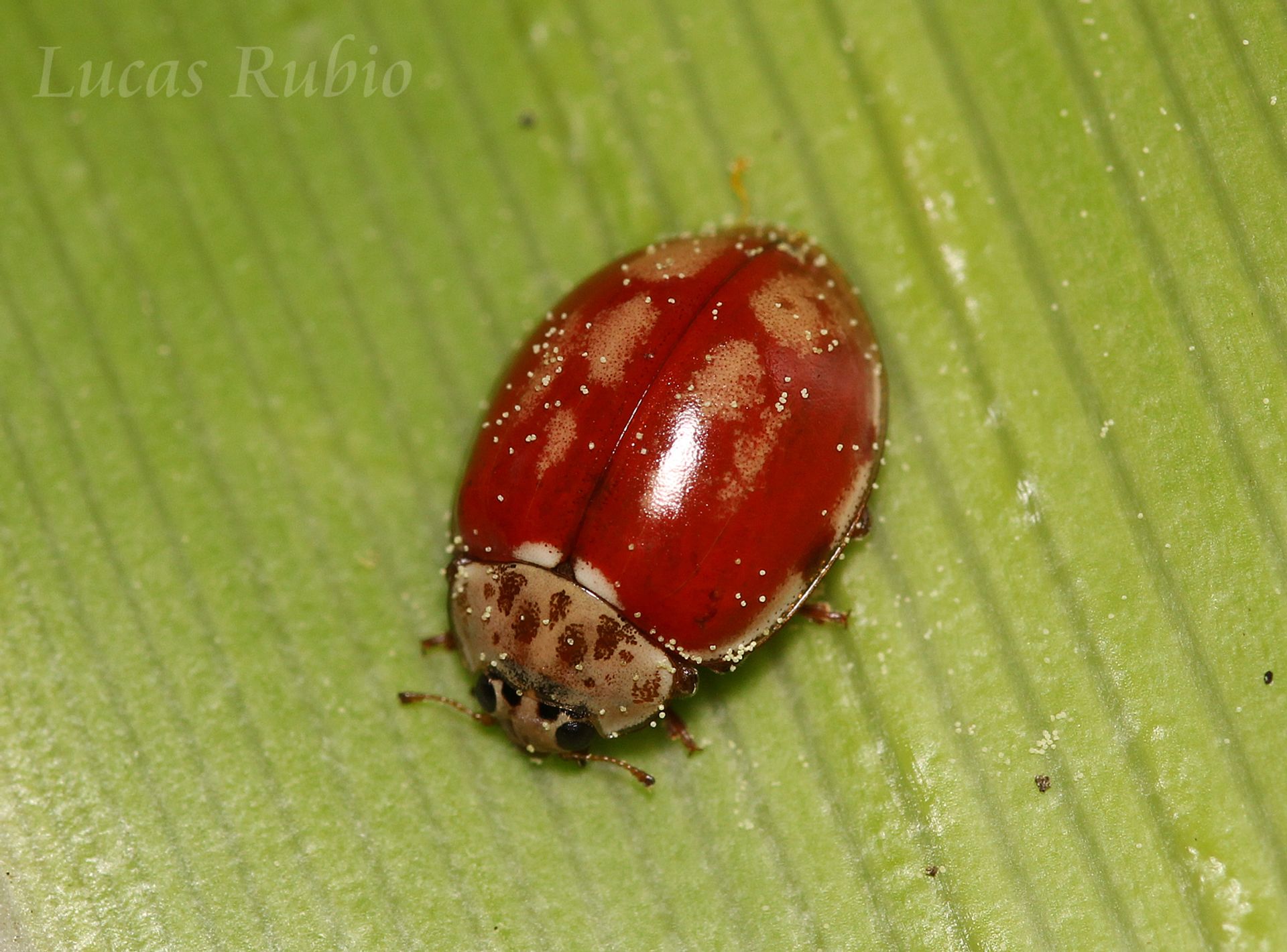
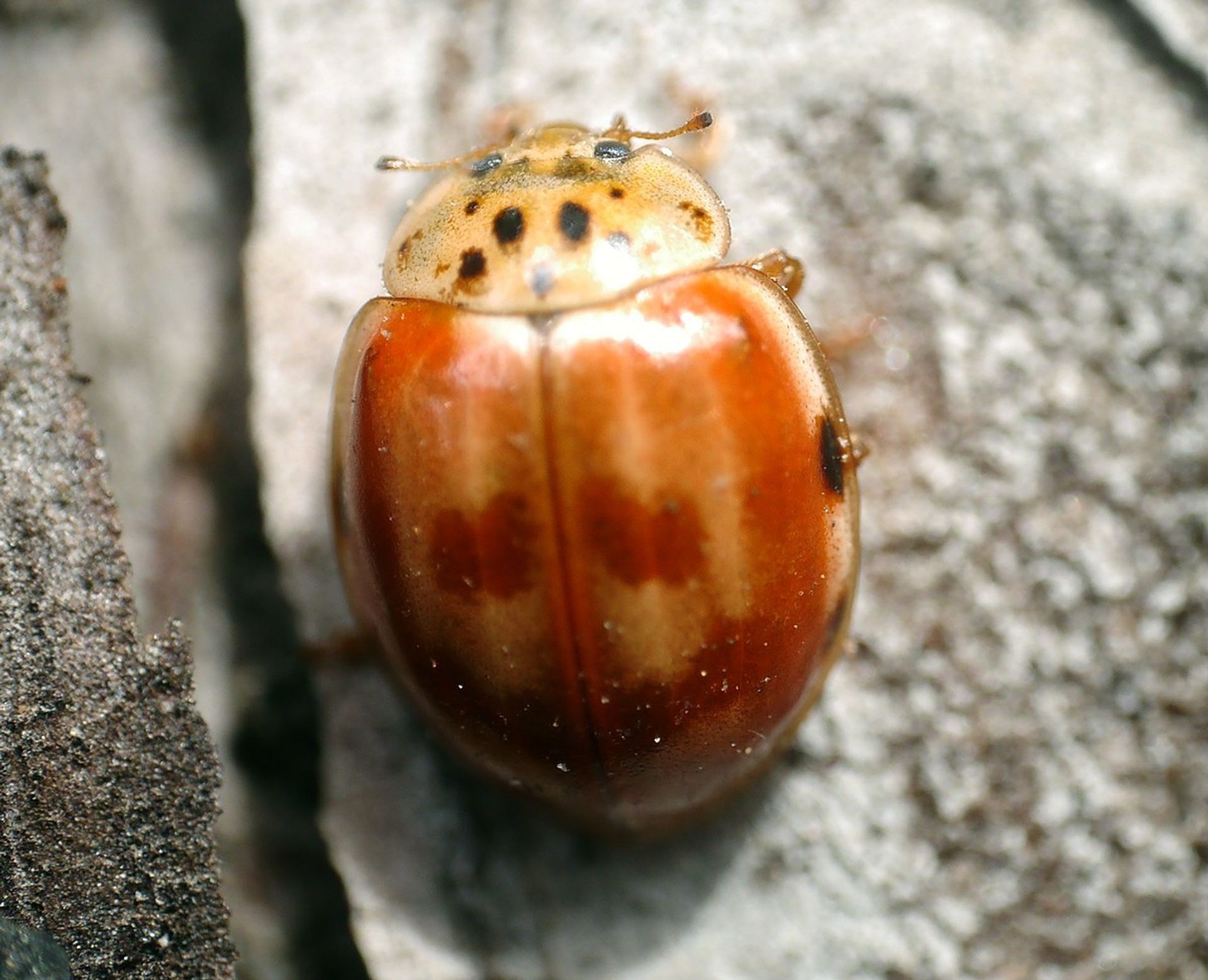
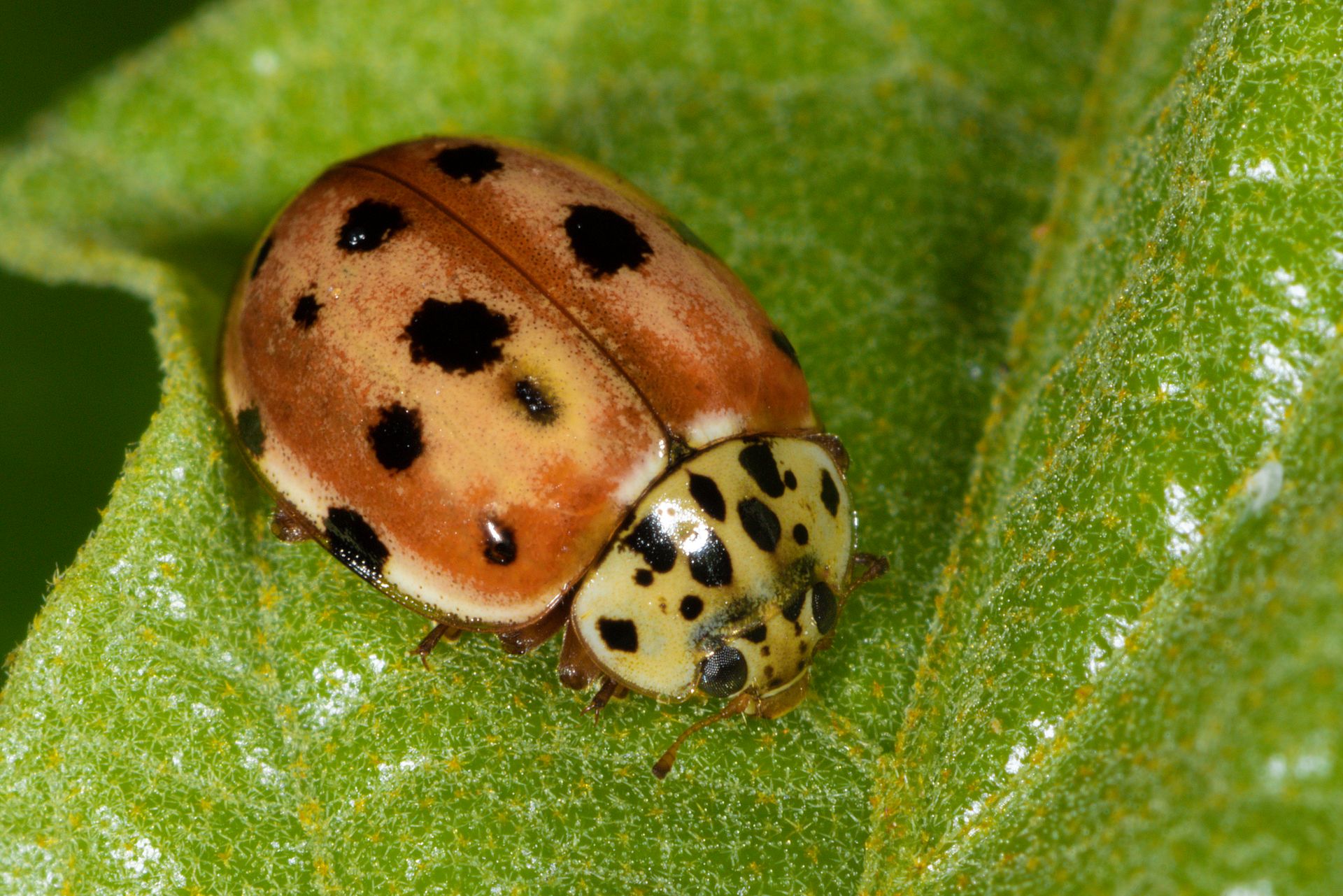
A medium-sized lady beetle (5.5–6 mm) native to Europe and Asia, characterized by highly variable coloration ranging from bright red to brown, yellow, or nearly black. The exhibits distinctive vertical pale streaks on many individuals and typically retains two marginal spots on each , yielding the 'four-spot' . Active from March to October, it is a of conifer aphids and overwinters in beneath tree bark. Unlike its H. axyridis, it has limited success due to lower and strong photoperiodic induction.
Pronunciation
How to pronounce Harmonia quadripunctata: /hɑːrˈmoʊniə ˌkwɒdrɪˈpʌŋkteɪtə/
These audio files are automatically generated. While they are not always 100% accurate, they are a good starting point.
Identification
Distinguished from the similar Harmonia axyridis by the consistent pronotal pattern of 11 markings (5 large and bold), versus the variable 'M'-shaped marking on H. axyridis. Lighter specimens with reduced spotting may resemble H. axyridis, but the pronotum and elytral patterns do not overlap. The two marginal spots on each are frequently visible even in lightly marked individuals. The underside is dark with orange-brown sides.
Images
Habitat
Pine forests from lowlands to hills; overwinters under bark of deciduous and coniferous trees including pines (Pinus) and poplars (Populus).
Distribution
Widespread from northern to southern Europe; sporadic in the British Isles. Present in the eastern and Near East. Established discovered in Massachusetts, USA starting in 2014, with earlier rare vagrant records in coastal eastern North America.
Seasonality
activity period extends from March to October. Reproductive induced under short-day conditions (photoperiodic threshold approximately 14–15 hours at 20–25°C).
Diet
Predatory; larvae and feed on aphids. Documented prey includes Lachnus pinicola (pine ), Myzus persicae (green peach aphid), and Schizaphis graminum (wheat aphid).
Life Cycle
-to- development: lower temperature threshold 12.0°C, requiring 274 . Constant 30°C lethal to embryos. Preimaginal development somewhat faster under short-day conditions. Preoviposition period: lower threshold 13.4°C, 152 degree-days. Maximum at 25°C and 16-hour : oviposition period exceeds 100 days, with average lifetime fecundity of approximately 800 eggs per female. Adults may live more than one year.
Behavior
Overwinters in communal beneath tree bark. Strong photoperiodic response regulates development rate and induces reproductive . Exhibits when prey is scarce.
Ecological Role
Predatory agent specializing in conifer .
Human Relevance
Potential biocontrol agent; limited risk compared to H. axyridis due to reproductive constraints. No documented tendency to bite humans or invade structures.
Similar Taxa
- Harmonia axyridisOverlapping size range and highly variable coloration; distinguished by pronotal pattern (M-shaped marking versus 11 consistent markings), elytral spot configuration, and behavioral differences (H. axyridis is a prolific home invader, H. quadripunctata is not).
Sources and further reading
- BugGuide
- Wikipedia
- GBIF taxonomy match
- iNaturalist taxon
- NCBI Taxonomy
- What’s in a name? Ladybug, lady beetle, lady bird beetle – meet the home invading Multicolored Asian Lady Beetle, Harmonia axyridis — Bug of the Week
- Ladybug, ladybug, fly away home: The Multicolored Asian Lady Beetle, Harmonia axyridis — Bug of the Week
- Bugs in Orange and Black, Part II: Halloween Lady Beetle - the Multicolored Asian Lady Beetle, Harmonia axyridis — Bug of the Week
- Home invader turned garden helper – Multicolored Asian lady beetle, Harmonia axyridis — Bug of the Week
- Back by Popular Demand - Ladybug, ladybug, fly away home: The Multicolored Asian Lady Beetle, Harmonia axyridis — Bug of the Week
- What comes in must go out - Brown marmorated stink bug, Halyomorpha halys, and the multicolred Asian lady beetles, Harmonia axyridis — Bug of the Week
- The influence of temperature, photoperiod, and diet on development and reproduction in the four-spot lady beetle Harmonia quadripunctata (Pontoppidan) (Coleoptera, Coccinellidae)