
Anisosticta
Chevrolat in Dejean, 1836
Species Guides
2- Anisosticta bitriangularis(Marsh Lady Beetle)
- Anisosticta borealis(Boreal Marsh Ladybeetle)
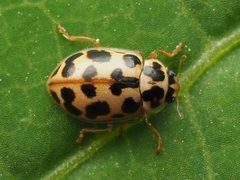
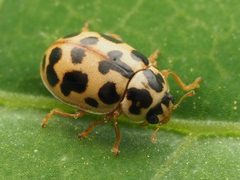
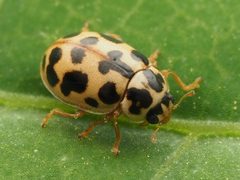
Anisosticta is a of ladybird beetles ( Coccinellidae) established by Chevrolat in 1836. The genus contains eight described distributed across the Holarctic region, including A. novemdecimpunctata, which has been documented as a for male-killing Spiroplasma bacteria. Species within this genus are characterized by their distinct elytral maculation patterns, often featuring triangular or markings.
Pronunciation
How to pronounce Anisosticta: /ˌænɪˈsɒstɪktə/
These audio files are automatically generated. While they are not always 100% accurate, they are a good starting point.
Images
Distribution
Holarctic; documented from Denmark, Norway, Sweden, and the northeastern United States (Vermont) based on occurrence records. The includes with distributions spanning Eurasia (A. sibirica, A. caucasica, A. kobensis) and North America (A. bitriangularis, A. borealis).
Host Associations
- Spiroplasma (Spiroplasma ixodetis clade) - male-killing endosymbiontInfects A. novemdecimpunctata; causes female-biased offspring sex ratios and 50% reduction in hatch rate. Maternally transmitted with high ; sensitive; infectious via haemolymph injection. Capable of interspecific horizontal transfer to novel (demonstrated in Adalia bipunctata).
Similar Taxa
- AdaliaBoth are Coccinellini with spotted or patterned ; A. novemdecimpunctata and related may resemble Adalia species in general habitus. The male-killing Spiroplasma from Anisosticta novemdecimpunctata was experimentally transferred to Adalia bipunctata, indicating potential ecological overlap.
- HippodamiaShared tribe Coccinellini with similar body plans; some Hippodamia have comparable maculation patterns that may cause confusion with Anisosticta species.
More Details
Male-killing Spiroplasma
Anisosticta novemdecimpunctata was the first documented in this for a male-killing bacterium. The Spiroplasma ixodetis clade bacterium manipulates host by killing male embryos, resulting in highly female-biased . This system has been used to study interspecific horizontal transfer of endosymbionts in ladybird beetles.
Species diversity
The comprises eight recognized : A. bitriangularis, A. borealis, A. caucasica, A. kobensis, A. novemdecimpunctata, A. sibirica, A. strigata, and A. terminassianae. Several species were described or revised in the mid-20th century by authors including Timberlake and Bielawski.