
Anisosticta bitriangularis
(Say, 1824)
Marsh Lady Beetle, Swamp Lady Beetle
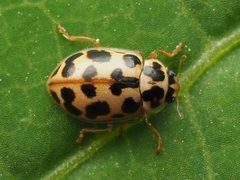
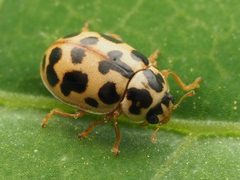
Anisosticta bitriangularis, commonly called the marsh lady beetle or swamp lady beetle, is a small lady beetle in the Coccinellidae. measure approximately 3–4 mm in length. The has a transcontinental distribution spanning Europe, Northern Asia (excluding China), and North America.
Pronunciation
How to pronounce Anisosticta bitriangularis: //ˌænɪsɒsˈtɪktə ˌbaɪtriːæŋˈɡjʊlərɪs//
These audio files are automatically generated. While they are not always 100% accurate, they are a good starting point.
Identification
The small size (3–4 mm) and association with wetland may help distinguish this from larger or more terrestrial lady beetles. The specific epithet 'bitriangularis' suggests possible triangular markings, though this is not confirmed in available sources.
Images
Appearance
are small, measuring approximately 3–4 mm in length. As a member of the Anisosticta, the likely exhibits the elongated body form characteristic of this genus, though specific coloration and pattern details are not provided in available sources.
Habitat
Associated with marsh and swamp environments, as indicated by . Specific microhabitat preferences within wetlands are not documented.
Distribution
Europe; Northern Asia (excluding China); North America (Labrador to New Jersey, west to Alaska, California, and British Columbia); specifically recorded in Alberta, Canada.
Similar Taxa
- Other Anisosticta speciesShare the elongated body form and wetland association; may require examination of subtle morphological features for separation.
- Other small CoccinellidaeOverlap in size range; specificity and detailed examination needed for identification.
More Details
Taxonomic note
Originally described as Coccinella bitriangularis by Say in 1824, later transferred to Anisosticta.