
Brumoides septentrionis
(Weise, 1885)
Winter Lady Beetle
Species Guides
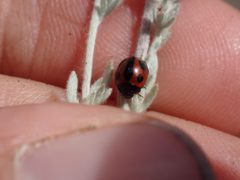
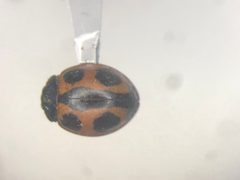
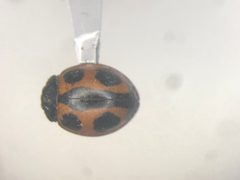
3Brumoides septentrionis is a small lady beetle (Coccinellidae) native to North America. measure approximately 2.9–3 mm in length. The exhibits distinctive coloration with black markings on a yellowish-brown to red elytral background. It is known by the 'Winter Lady Beetle' and comprises three recognized with distinct geographic ranges across North America.
Pronunciation
How to pronounce Brumoides septentrionis: //bruˈmɔɪ.diːz sɛptɛnˈtriːoʊnɪs//
These audio files are automatically generated. While they are not always 100% accurate, they are a good starting point.
Identification
Distinguished from other North American Coccinellidae by its diminutive size (2.9–3 mm) and the specific color pattern of black markings on yellowish-brown to red . The three show geographic separation that may aid identification: B. s. septentrionis in northern regions, B. s. davisi in the east-central United States and southeastern Canada, and B. s. hogei in the southwestern United States and Mexico.
Images
Appearance
are small, measuring 2.9–3 mm in length. The body is predominantly black with the (hardened forewings) displaying a yellowish-brown to red background color. The contrasting dark markings on the lighter elytral base create a distinctive pattern characteristic of the .
Distribution
North America. The occurs across three subspecific ranges: northern regions from Hudson Bay to northern Arizona, west to Alaska and northern California (B. s. septentrionis); southeastern Canada to Virginia, west to Minnesota (B. s. davisi); and Mexico with the southwestern United States from Colorado to western Texas, west to Idaho and Arizona (B. s. hogei).
More Details
Subspecies
Three are recognized: Brumoides septentrionis septentrionis (Weise, 1885), Brumoides septentrionis davisi (Leng, 1908), and Brumoides septentrionis hogei (Gorham, 1894). These subspecies show non-overlapping geographic distributions across North America.
Taxonomic Note
GBIF lists the status as 'DOUBTFUL', suggesting potential taxonomic uncertainty or need for revision. The original basionym was Brumus septentrionis Weise, 1885.