Tanaops
LeConte, 1859
Species Guides
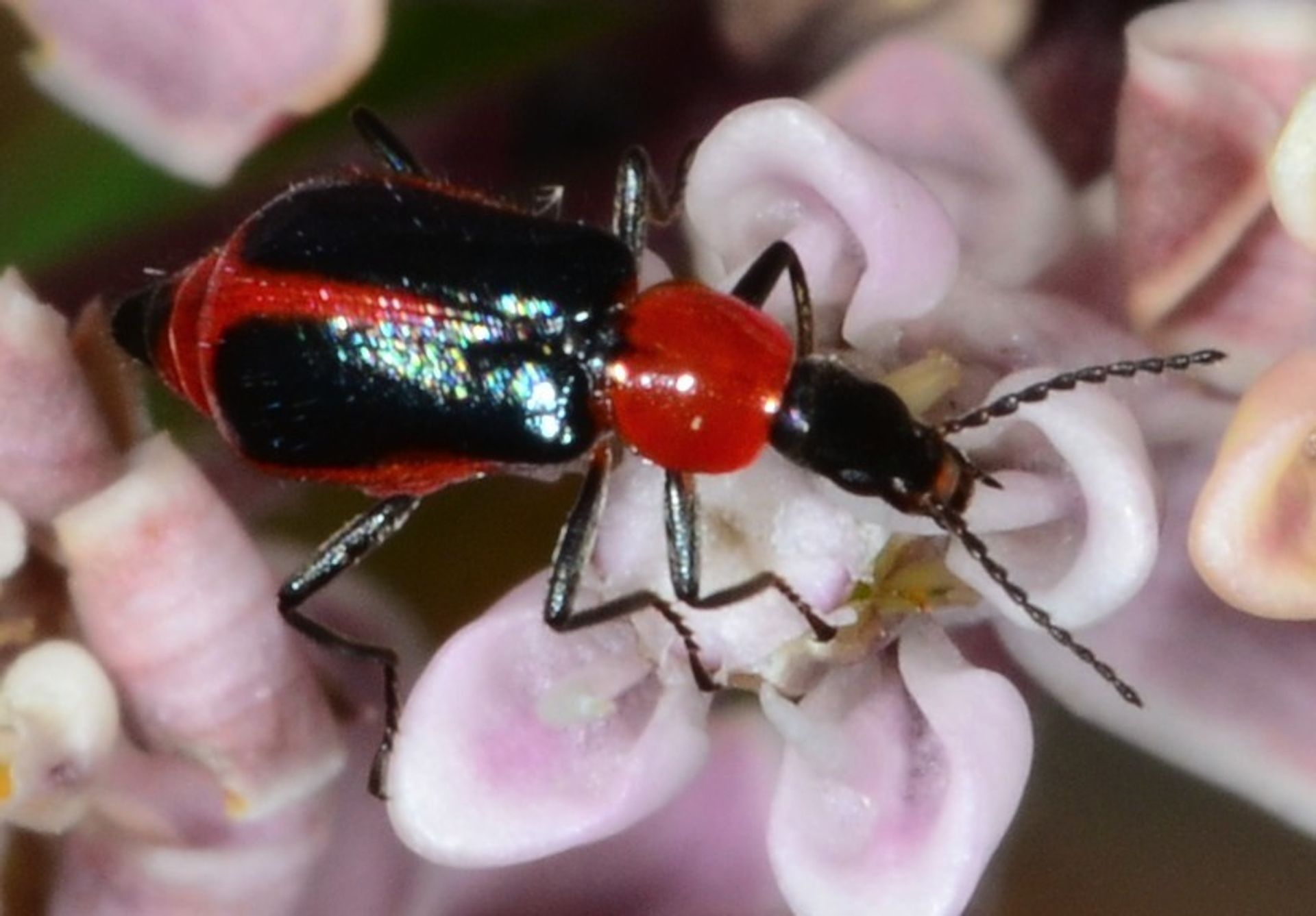
5Tanaops is a of soft-winged flower beetles ( Melyridae) comprising approximately 25 described distributed in the Americas. These beetles belong to a family known for their flexible, often colorful and frequent association with flowers. The genus was established by John Lawrence LeConte in 1859. Members of Tanaops share the general melyrid body plan but specific ecological and behavioral traits remain poorly documented in the literature.
Pronunciation
How to pronounce Tanaops: //təˈneɪ.ɒps//
These audio files are automatically generated. While they are not always 100% accurate, they are a good starting point.
Identification
Tanaops can be recognized as melyrids by their soft, flexible that do not form a rigid shell over the , distinguishing them from most other . Within Melyridae, generic-level identification requires examination of antennal structure, pronotal shape, and male genitalia. Tanaops species are generally small to medium-sized beetles, often with somewhat elongated bodies. Accurate species identification within the is challenging without knowledge and typically requires dissection and reference to original species descriptions.
Images
Distribution
The Tanaops is found in the Americas. Specific country-level distributions for individual are not comprehensively documented in major aggregators.
Ecological Role
As members of Melyridae, Tanaops are likely associated with flowers where soft-winged flower beetles commonly feed on pollen and small arthropods, potentially contributing to pollination and serving as or prey in . However, specific ecological roles for Tanaops have not been documented.
Similar Taxa
- Other Melyridae generaMany melyrid share soft and flower-visiting habits. Tanaops is distinguished by subtle morphological characters including antennal and genitalic features that require examination.
- Cantharidae (soldier beetles)Soldier beetles also have soft and frequent flowers, but they belong to a separate distinguished by different tarsal structure and usually more parallel-sided body form.
More Details
Taxonomic history
The was described by LeConte in 1859, a prolific 19th-century American entomologist who named thousands of . The etymology of 'Tanaops' is not explicitly documented in readily available sources.
Research needs
Despite the containing approximately 25 , Tanaops remains poorly studied. Basic natural history information including plant associations, larval , and detailed distribution records are largely absent from the scientific literature.