Malachiinae
Fleming, 1821
Malachite Beetles, Soft-winged Flower Beetles
Genus Guides
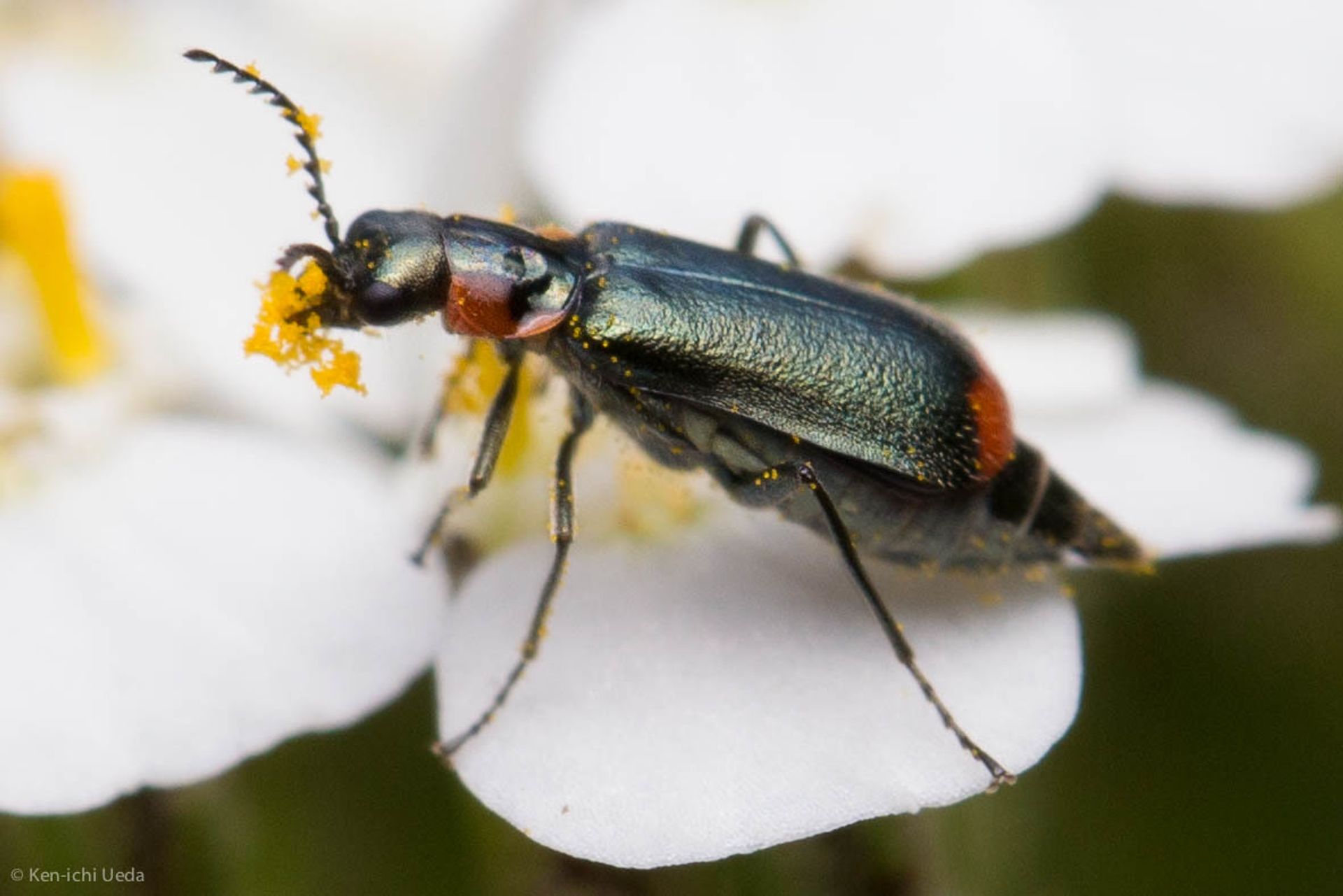
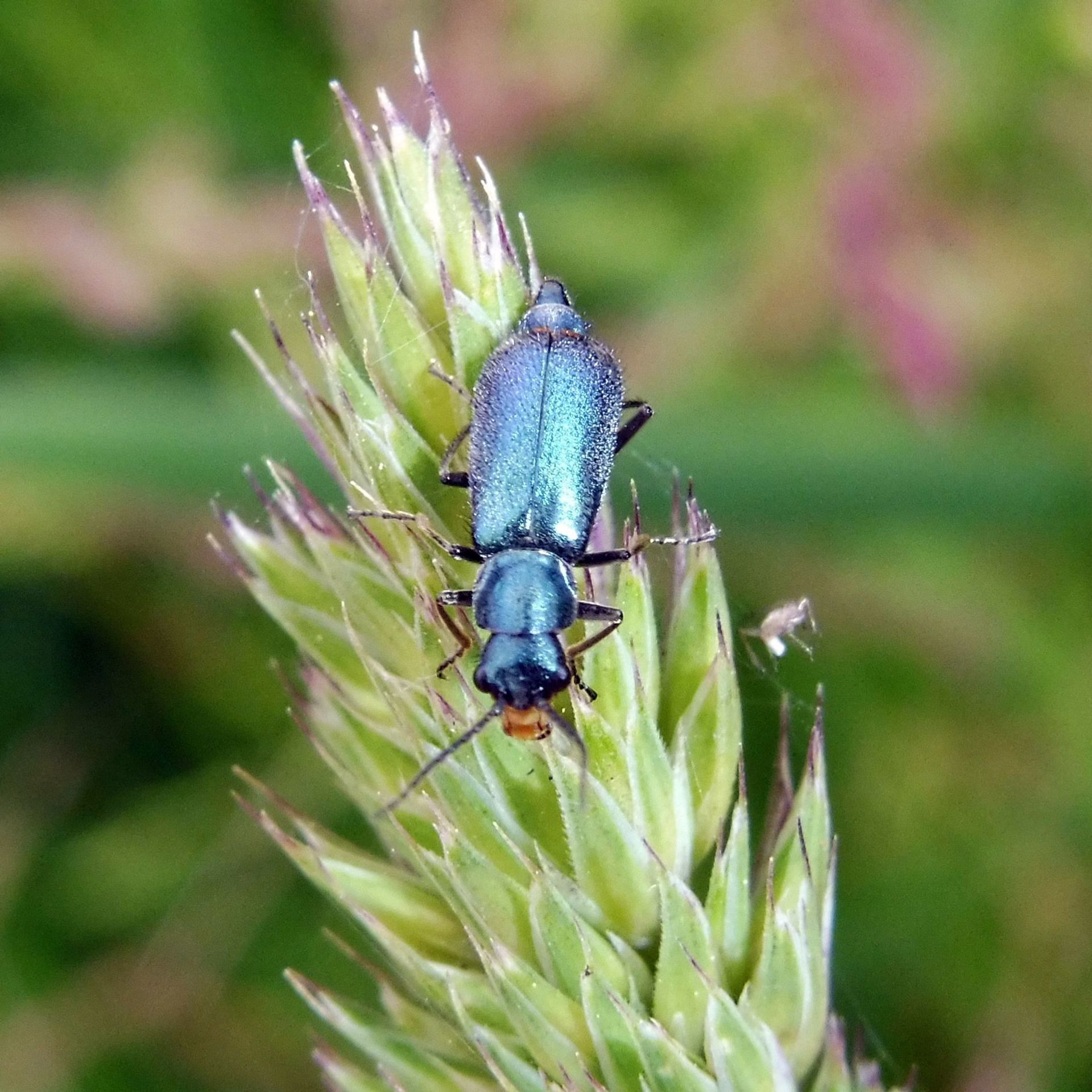
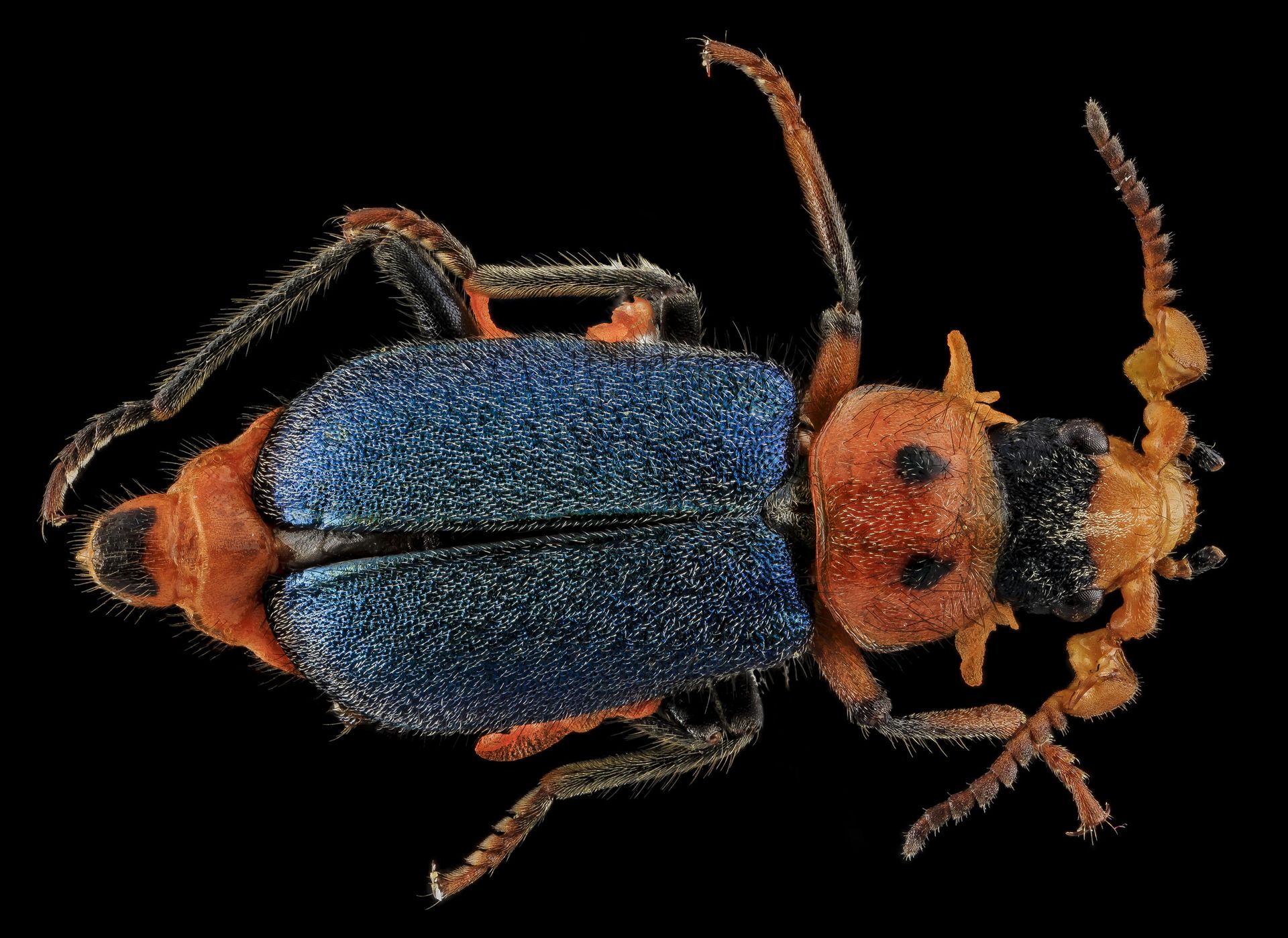
2Malachiinae is a of soft-winged flower beetles within the Melyridae, characterized by distinctive orange lateral abdominal structures that may be everted and saclike or withdrawn. The subfamily has a global distribution and includes common North American such as Collops quadrimaculatus. Members are anthophilic, with and activity periods closely tied to plant . Climate warming has been documented to accelerate their phenology and expand ranges in some regions, particularly in the Carpathians.
Pronunciation
How to pronounce Malachiinae: /ˌmæləˈkaɪəˌniː/
These audio files are automatically generated. While they are not always 100% accurate, they are a good starting point.
Identification
Distinguished from other Melyridae by the presence of peculiar orange structures along the sides of the , which may be everted and saclike or withdrawn and inconspicuous. The common North American Collops quadrimaculatus is reddish with two bluish-black spots on each . Males of some exhibit species-specific characters useful for identification.
Images
Habitat
Found in diverse environments including grasslands, flower-rich areas, and riparian zones. Some inhabit specialized such as salt lakes (e.g., Salsolaius biserratus from Lake Way, Western Australia). Members are commonly found on grasses, flowers, and riverside or seashore rocks.
Distribution
Global distribution. Documented from North America (including the common Collops), Europe (including the Carpathian region with range expansions documented), the East-Mediterranean region (Lebanon, Turkey, Jordan), Western Australia (including salt lake ), and China.
Seasonality
period and appearance timing depend on plant . In the Carpathian region, warming temperatures have caused earlier appearance in recent years.
Life Cycle
Larvae exhibit variable degrees of at hatch. In Malachius prolongatus, larvae show the most advanced morphogenesis currently known in malachiine beetles at hatching, with developed , , mandibular , maxillary and labial palps, and . Larvae possess thoracic egg bursters. Larval morphogenesis and developmental timing have been compared across multiple .
Behavior
Anthophilic (flower-associated) insects. Oviposition has been described in some .
Human Relevance
Used as indicators of climate change effects, with documented range expansions and phenological shifts in response to regional temperature increases.
Similar Taxa
- other Melyridae subfamiliesLack the distinctive orange lateral abdominal structures (everted saclike or withdrawn) characteristic of Malachiinae
Sources and further reading
- BugGuide
- Wikipedia
- iNaturalist taxon
- NCBI Taxonomy
- Catalogue of Life
- Morphology and biology of Malachius prolongatus (Coleoptera: Melyridae: Malachiinae)
- Anthomalachius, a new genus of soft-winged flower beetles (Coleoptera, Malachiidae: Malachiinae)
- Notes on the Malachiini of the East-Mediterranean region, with description of a new species (Coleoptera, Melyridae, Malachiinae)
- Changes in the Carpathian fauna of Malachiinae beetles (Coleoptera, Melyridae) in the context of temperature increase
- Salsolaius gen. nov. a new genus of Apalochrini (Coleoptera, Melyridae, Malachiinae) from the salt Lake Way of Western Australia
- Contribution to the tribe Apalochrini (Coleoptera, Melyridae, Malachiinae) of China, with notes on the genus Dicranolaius Champion and Intybia Pascoe.
- Contribution to the Chinese Intybia Pascoe, 1866 (Coleoptera, Melyridae, Malachiinae), with descriptions of two new species groups and one new species.
- Platyintybia, a new genus of Apalochrini (Coleoptera, Melyridae, Malachiinae) from China.