
Collops quadrimaculatus
(Fabricius, 1798)
four-spotted collops
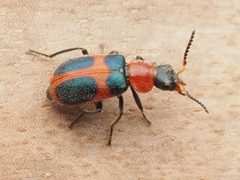
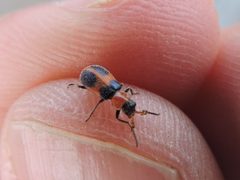
Collops quadrimaculatus is a of soft-winged flower beetle in the Melyridae, commonly known as the four-spotted collops. It is recognized as a beneficial in agricultural systems, particularly in cotton production. The species occurs across Central and North America, with documented in Canada (Ontario, Québec), the United States, and Mexico. are active during the growing season and are frequently recorded in field observations.

Pronunciation
How to pronounce Collops quadrimaculatus: //ˈkɒl.ɒps ˌkwɒd.rɪ.mæk.jʊˈleɪ.təs//
These audio files are automatically generated. While they are not always 100% accurate, they are a good starting point.
Images
Distribution
Central and North America. Documented from Canada (Ontario, Québec, Vermont-border region), the United States, and Mexico. GBIF records confirm presence in Ontario, Québec, and Vermont.
Behavior
Has been observed as a in cotton agroecosystems. Beat bucket sampling methods are recommended for detecting in field crops. Adults are likely given characteristics, though specific activity patterns are not documented.
Ecological Role
Recognized as a beneficial natural enemy in programs for cotton. Listed among predatory insects that help suppress pest , including aphids and caterpillar pests. Conservation of this is encouraged to maintain services.
Human Relevance
Documented as a agent in cotton production systems in Texas and other cotton-growing regions. Its presence is monitored through field scouting programs to assess natural enemy . No known negative impacts to human health or agriculture.
More Details
Sources and further reading
- BugGuide
- Wikipedia
- GBIF taxonomy match
- iNaturalist taxon
- NCBI Taxonomy
- Mosquitoes, Malaria and the Civil War | Bug Squad
- Managing Cotton Insects in Texas - AgriLife Extension Entomology
- Meloidae Holdings | Entomology Research Museum
- Plant Pollen May Be Important Food Source for Some Mosquitoes in U.S.
- How One State's Mosquito Data Could Reduce Risk of Malaria Returning to U.S.
- Bug Eric: Mosquitoes