
Collops versatilis
Fall, 1912
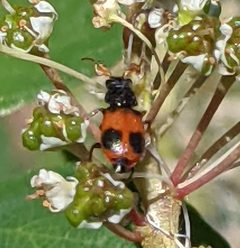
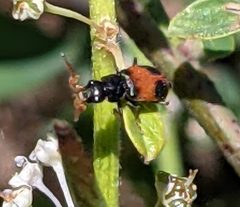
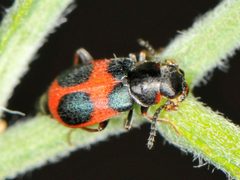
Collops versatilis is a soft-winged flower beetle in the Melyridae, first described by Fall in 1912. The Collops comprises predatory beetles commonly found on flowers, where they feed on other insects. C. versatilis has been documented from British Columbia, Canada, with 75 iNaturalist observations recorded. Like other members of the genus, it likely serves as a beneficial in agricultural and natural , though specific ecological details for this remain limited.
Pronunciation
How to pronounce Collops versatilis: /ˈkɒləps vərˈsætɪlɪs/
These audio files are automatically generated. While they are not always 100% accurate, they are a good starting point.
Identification
Collops beetles are generally recognized by their soft, somewhat flattened bodies, often with bright coloration patterns combining red, black, and blue. C. versatilis can be distinguished from by specific morphological features described in Fall's 1912 description, though precise diagnostic characters require examination of original type material. The is characterized by enlarged hind and distinctive antennal structure. Accurate identification to level typically requires reference to original descriptions or keys.
Images
Habitat
Based on documented observations, C. versatilis occurs in British Columbia, Canada. Other Collops are strongly associated with flowering plants in open, sunny including grasslands, meadows, agricultural fields, and disturbed areas. The presence of blooming vegetation appears critical for habitat suitability, as these beetles actively forage on flowers for prey.
Distribution
Documented from British Columbia, Canada (GBIF). The 75 iNaturalist observations suggest established in this region, though specific locality details within the province are not provided in available sources.
Behavior
Members of the Collops are active on flowers, where they hunt small insects and other arthropods. They are and frequently observed on blooms during daylight hours. C. versatilis presumably exhibits similar flower-visiting , though direct observations specific to this are not documented in available sources.
Ecological Role
As a member of the Melyridae, C. versatilis likely functions as a in flower-based . Related Collops have been documented as important agents in agricultural systems, preying on pest insects including aphids, , and other small arthropods. Their presence on flowers also contributes to pollination dynamics, though they are not primary .
Human Relevance
Collops beetles as a group are recognized as beneficial insects in programs, particularly in cotton and other row crops. The related C. vittatus has been studied as a of pest including those of Lygus hesperus. C. versatilis may serve similar ecological functions in Canadian agricultural and natural systems, though specific economic impact studies are lacking.
Similar Taxa
- Collops vittatusCongeneric with similar flower-associated predatory habits; C. vittatus has been extensively studied in southwestern U.S. agricultural systems and differs in geographic distribution and presumably in specific color pattern and body proportions.
- Other Melyridae genera (e.g., Malachius, Attalus)Soft-winged flower beetles share general body form and flower-visiting , but Collops is distinguished by enlarged hind and specific antennal and mouthpart structure.
More Details
Taxonomic Note
The was described by H.C. Fall in 1912. The Collops currently contains approximately 100 described species, primarily distributed in North America. The Melyridae (soft-winged flower beetles) comprises over 3,000 species worldwide, with many exhibiting bright aposematic coloration.
Research Context
While C. versatilis itself has not been subject to detailed ecological study, the has received attention due to the agricultural importance of certain . Research on C. vittatus using ELISA-based gut content analysis demonstrates the potential for similar approaches to understand the feeding of C. versatilis.