
Dasytes plumbeus
(Müller, 1776)
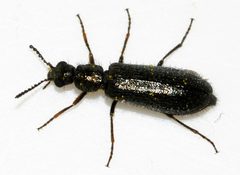
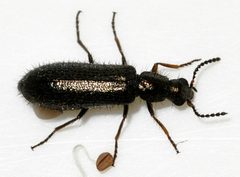
Dasytes plumbeus is a soft-bodied in the Melyridae, native to the Palearctic region and introduced to North America. are small, metallic gray to lead-colored beetles with soft characteristic of the family. The is frequently observed and well-documented, with over 3,000 iNaturalist observations. It belongs to a of predatory or pollen-feeding beetles commonly known as soft-winged flower beetles.
Pronunciation
How to pronounce Dasytes plumbeus: //ˈdæ.sɪ.tiːz ˈplʌm.bi.əs//
These audio files are automatically generated. While they are not always 100% accurate, they are a good starting point.
Identification
Distinguished from other small gray beetles by the combination of soft, flexible and metallic lead-gray coloration. Differs from related Dasytes by uniform gray coloration without strong contrasting patterns. Can be separated from hard-bodied beetles (e.g., some Chrysomelidae) by the pliable, non-rigid wing covers. Melyridae members are further characterized by the presence of a distinct 'melyrid pore' on the , though this requires magnification to observe.
Images
Habitat
Found in open, sunny including meadows, grasslands, forest edges, and gardens. frequent flowers where they feed on pollen and small prey. Larvae occur in soil, leaf litter, or decaying wood.
Distribution
Native to the Palearctic region (Europe, North Africa, and Asia). Introduced and established in North America. Documented presence in Belgium with multiple records; widespread across western and central Europe.
Seasonality
are active primarily from late spring through summer, with peak activity during flowering periods. In temperate regions, activity spans approximately May to August.
Diet
feed on pollen and small soft-bodied insects such as aphids. Larvae are predatory, feeding on small in soil or decaying organic matter.
Life Cycle
Complete with , larva, pupa, and stages. Larvae develop in soil, leaf litter, or rotting wood. occurs in soil or concealed locations. Adults emerge in spring and are relatively long-lived within the season.
Behavior
are and frequently observed on flowers, where they move actively among blossoms. Capable of but often walk on vegetation. When disturbed, may drop to the ground or seek concealment in vegetation.
Ecological Role
contribute to pollination through pollen consumption. Both adults and larvae function as of small soft-bodied arthropods, potentially providing of pest insects such as aphids.
Human Relevance
Considered beneficial in gardens and agricultural settings due to predatory habits. No known negative economic impact. Occasionally noticed by naturalists and photographers due to metallic coloration and flower-visiting .
Similar Taxa
- Dasytes nigerSimilar size and soft , but uniformly black rather than lead-gray; often found in similar .
- Dasytes cyaneusOverlapping distribution and preference; distinguished by more pronounced metallic blue or green coloration.
- Malachius bipustulatusAnother Melyridae with soft , but larger with distinctive red and black color pattern on elytra.
- Chrysomelidae (leaf beetles)Some small gray leaf beetles resemble D. plumbeus in size and color, but have hard, rigid that cannot be flexed.
More Details
Taxonomic Note
The specific epithet 'plumbeus' refers to the lead-like gray coloration. The was originally described by Müller in 1776 under a different (likely Cantharis or similar) before transfer to Dasytes.
Introduction to North America
Established in North America represent a human-mediated introduction, likely through shipping or plant material; first documented in the late 19th or early 20th century.