
Grynocharis
C.G. Thomson, 1859
bark-gnawing beetles
Species Guides
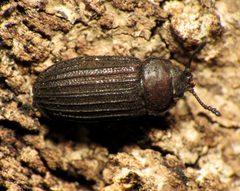
1- Grynocharis quadrilineata(bark-gnawing beetle)
Grynocharis is a of bark-gnawing beetles in the Lophocateridae, established by C.G. Thomson in 1859. The genus contains at least four described distributed across Europe and North America. These beetles are associated with dead wood . The family placement has been subject to taxonomic revision, with some sources historically placing Grynocharis in Trogossitidae.
Pronunciation
How to pronounce Grynocharis: /ˌɡrɪnoʊˈkɛərɪs/
These audio files are automatically generated. While they are not always 100% accurate, they are a good starting point.
Identification
Members of Grynocharis can be distinguished from related by their association with the Lophocateridae, characterized by specific morphological features including antennal structure and body form typical of bark-gnawing beetles. The genus contains with distinct geographic distributions that may aid in identification: G. oblonga in Europe, and G. oregonensis and G. quadrilineata in North America.
Images
Habitat
in this are associated with dead wood and bark, consistent with their of bark-gnawing beetles. They inhabit forested environments where decaying wood is present.
Distribution
Documented from Europe (G. oblonga) and North America (G. oregonensis, G. quadrilineata). GBIF records indicate presence in Norway and Sweden.
Behavior
The 'bark-gnawing beetles' refers to feeding habits involving the consumption of bark and associated materials, though specific behavioral details for Grynocharis are not well documented.
Ecological Role
As decomposers associated with dead wood, in this likely contribute to nutrient cycling and wood decomposition in forest . Their presence in decaying bark suggests a role in processing dead plant material.
Similar Taxa
- Trogossitidae (historical family placement)Grynocharis was historically classified in Trogossitidae, and some sources still use this placement. The Lophocateridae was elevated from status, causing taxonomic confusion in older literature.
- Other Lophocateridae generaOther bark-gnawing beetle in the same share similar preferences and general , requiring careful examination of specific characters for proper identification.
More Details
Taxonomic instability
The placement of Grynocharis has been revised. While iNaturalist and NCBI place it in Lophocateridae, GBIF and some historical sources list it in Trogossitidae. This reflects ongoing taxonomic refinement in the superfamily Cleroidea.
Species diversity
At least four are described: G. oblonga (Europe), G. oregonensis (Pacific Northwest, North America), G. pubescens, and G. quadrilineata (eastern North America). The total diversity may be greater than currently recognized.