
Neocallotillus
Burke, 2016
Calloused Clerids
Species Guides
1- Neocallotillus elegans(Elegant Calloused Clerid)
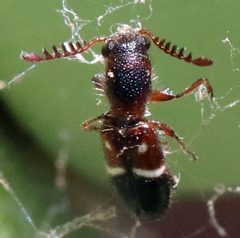
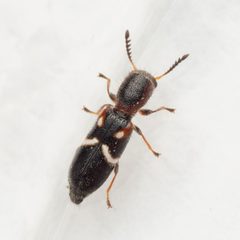
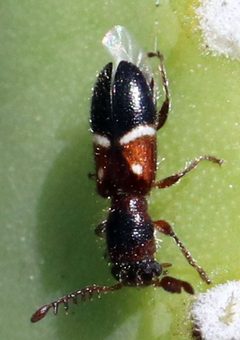
Neocallotillus is a of checkered beetles in the Cleridae, Tillinae. It was erected in 2016 by Burke and Zolnerowich to accommodate formerly placed in Callotillus. The genus is distinguished by specific morphological features of the pronotum and . It occurs in arid and semi-arid regions of the southwestern United States and Mexico.
Pronunciation
How to pronounce Neocallotillus: /ˌniː.oʊ.kæˈlɒtɪləs/
These audio files are automatically generated. While they are not always 100% accurate, they are a good starting point.
Identification
Neocallotillus can be distinguished from the related Callotillus by the presence of callous-like raised areas on the pronotum, which give the group its . within the genus are characterized by patterned with contrasting dark and light markings typical of checkered beetles. The genus was separated from Callotillus based on detailed morphological study of the New World Tillinae.
Images
Habitat
Arid and semi-arid regions including deserts and scrublands of the southwestern United States and Mexico.
Distribution
Southwestern United States (Nevada, California, Arizona, New Mexico, Texas, Louisiana) and Mexico through Central America.
Similar Taxa
- CallotillusFormerly included now placed in Neocallotillus; distinguished by pronotal callosities and other morphological features detailed in Burke & Zolnerowich (2016).
More Details
Taxonomic history
Neocallotillus was described in 2016 based on a comprehensive revision of the New World Callotillus. The type is Neocallotillus elegans (formerly Callotillus elegans).