
Cymatodera
Gray, 1832
checkered beetles
Genus Guides
35- Cymatodera aegra-complex(checkered beetle)
- Cymatodera angustata
- Cymatodera antennata
- Cymatodera balteata(banded checkered beetle)
- Cymatodera bicolor(Bicolored Checkered Beetle)
- Cymatodera brevicollis
- Cymatodera californica
- Cymatodera decipiens
- Cymatodera delicatula(checkered beetle)
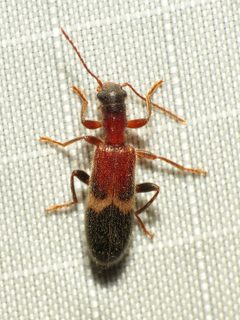
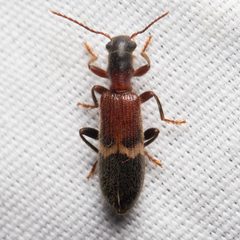
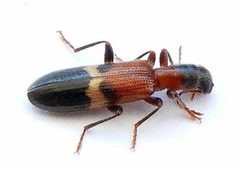
Cymatodera is a of checkered beetles in the Cleridae, tribe Tillinae, comprising at least 70 described distributed primarily in the Neotropics and Nearctic regions. Species within this genus exhibit considerable morphological diversity, with several new species described recently from Mexico, Central America, and South America. Members are typically found in association with woody vegetation and are attracted to ultraviolet light.
Pronunciation
How to pronounce Cymatodera: //ˌsaɪ.məˈtɒd.ə.rə//
These audio files are automatically generated. While they are not always 100% accurate, they are a good starting point.
Identification
Cymatodera can be distinguished from other tilline clerids by combinations of antennal structure, pronotal and elytral , and genitalic . Specific diagnostic characters vary by species and include features such as acuminate elytral apices (in C. acuminata), body size reduction (in C. parva), and distinctive coloration patterns. Accurate identification to species level requires examination of male genitalia and detailed comparison with .
Images
Habitat
have been collected from diverse including desert thorn-scrub, oak woodlands, and pine-oak-juniper forests. Specific records include associations with Acacia rigidula (sweet acacia) and other woody legumes. One specimen was collected at ultraviolet light in Montosa Canyon, Arizona, suggesting activity patterns in at least some species.
Distribution
The occurs from the southwestern United States (Arizona) through Mexico and Central America to South America (Colombia). Documented distributions include: C. acuminata and C. unica from Mexico; C. parva from El Salvador and Honduras; and C. magdalena from Colombia. The genus is most diverse in the Neotropical region.
Seasonality
activity has been documented during summer months (July–August) in Arizona. At least one was collected at ultraviolet light, indicating or activity.
Behavior
of at least some are attracted to ultraviolet light, suggesting or foraging . One species was observed on flowers of Acacia rigidula in association with other beetles.
Ecological Role
As members of the Cleridae (checkered beetles), Cymatodera likely function as of other insects, though specific prey relationships remain undocumented. Their occurrence on flowering vegetation suggests possible pollination interactions or hunting of flower-visiting insects.
Similar Taxa
- TrichodesBoth are tilline clerids with checkered coloration, but Trichodes are typically more robust with different antennal proportions and are often strongly associated with flowers.
- EnoclerusAnother clerid with checkered patterns, but Enoclerus generally have different pronotal shapes and elytral sculpturing; accurate separation requires examination of structural characters.
More Details
Taxonomic activity
The has been subject to recent taxonomic revision, with four new described in 2019 from Mexico, Central America, and Colombia, indicating ongoing discovery and the likelihood of additional undescribed species.
Collection methods
Ultraviolet light trapping has proven effective for collecting Cymatodera, as documented in Montosa Canyon, Arizona. Beating and sweeping vegetation, particularly woody legumes such as Acacia , has also yielded specimens.