
Enoclerus laetus
(Klug, 1842)
Species Guides
1Enoclerus laetus is a of checkered beetle ( Cleridae) distributed across Central America and North America. The species was first described by Klug in 1842 and includes five recognized . Like other members of the Enoclerus, this species is likely associated with dead wood where it preys on other insects, particularly bark beetles. The genus Enoclerus is the largest in the family Cleridae in North America north of Mexico, with 32 species.
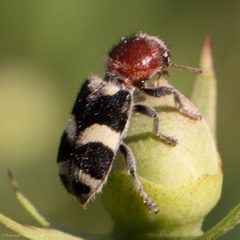
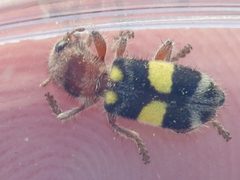
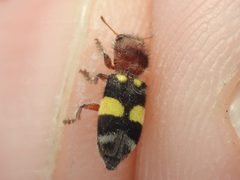
Pronunciation
How to pronounce Enoclerus laetus: /ɛˈnɔklɛrəs ˈlaɪtəs/
These audio files are automatically generated. While they are not always 100% accurate, they are a good starting point.
Images
Distribution
Central America and North America. Specific records include British Columbia in Canada. The comprises five with potentially overlapping but distinct geographic ranges: E. l. abruptus, E. l. chapini, E. l. intergivus, E. l. laetus, and E. l. nexus.
Ecological Role
Based on documented of , particularly E. ichneumoneus, members of the Enoclerus are of woodboring beetles, especially bark beetles in the weevil Scolytinae. They are not themselves woodborers but rather exploit the galleries created by their prey.
More Details
Subspecies
Five are recognized: Enoclerus laetus abruptus (LeConte, 1858), E. l. chapini Wolcott, 1922, E. l. intergivus Barr, 1976, E. l. laetus (Klug, 1842), and E. l. nexus Barr, 1976. The nominate subspecies E. l. laetus retains the original description date of 1842.