
Orsodacninae
C.G. Thomson, 1859
Genus Guides
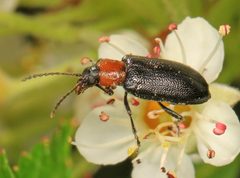
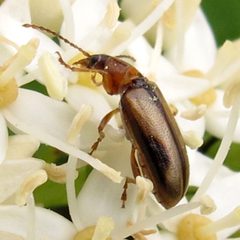
1Orsodacninae is a of beetles containing a single , Orsodacne, with four Holarctic . These beetles are small leaf beetles in the Orsodacnidae, a group historically placed within Chrysomelidae. The subfamily is characterized by distinctive morphological features and a restricted geographic distribution in the Northern Hemisphere.
Pronunciation
How to pronounce Orsodacninae: /ɔɹsoʊˈdæknɪˌni/
These audio files are automatically generated. While they are not always 100% accurate, they are a good starting point.
Identification
Orsodacninae can be distinguished from other leaf beetle by the combination of: with 11 segments that are relatively short and not strongly clubbed; pronotum with distinct lateral margins; and that appear 4-4-4 (pseudotetramerous) due to the small size of the fourth tarsomere. The single Orsodacne has with metallic coloration, often green or coppery, and compact body form.
Images
Distribution
Holarctic distribution, occurring in the northern regions of North America, Europe, and Asia.
Similar Taxa
- GalerucinaeSimilar compact body form and leaf beetle ; distinguished by Galerucinae having more variable antennal proportions and different tarsal structure (truly 4-4-4 or 5-5-5 in some groups).
- CriocerinaeHistorical confusion in classification; Criocerinae have elongated bodies and often possess enlarged hind for jumping, unlike Orsodacninae.