
Androlyperus incisus
Schaeffer, 1906
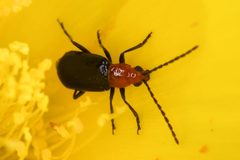
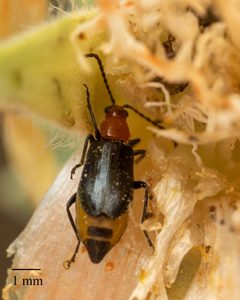
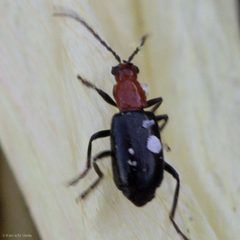
Androlyperus incisus is a skeletonizing leaf beetle in the Chrysomelidae, first described by Schaeffer in 1906. The is distributed across Central America and North America. It belongs to a of leaf beetles whose members feed on plant foliage, creating distinctive skeletonized damage patterns. Observations of this species remain relatively sparse, with limited published documentation of its .
Pronunciation
How to pronounce Androlyperus incisus: /ænˌdroʊˈlɪpərəs ɪnˈsaɪsəs/
These audio files are automatically generated. While they are not always 100% accurate, they are a good starting point.
Identification
As a member of Chrysomelidae, this can be recognized by the hardened forewings () characteristic of beetles, with the -specific traits of leaf beetles. The specific epithet "incisus" (meaning "cut" or "notched") may refer to incised or notched markings on the body, though original description details would be needed for confirmation. Distinctive features separating it from in Androlyperus are not documented in readily available sources.
Images
Distribution
Central America and North America. GBIF records confirm presence in both Middle America and North America regions.
More Details
Taxonomic note
The Androlyperus is classified within Chrysomelidae, the leaf beetle . The specific epithet "incisus" is Latin for "cut" or "notched," a common descriptor in often referring to body sculpturing or elytral patterns.
Data availability
As of current sources, this has only 14 observations on iNaturalist and minimal published biological documentation. Most aspects of its , associations, and remain unrecorded in accessible literature.