
Paranapiacaba tricincta
(Say, 1824)
Checkered Melon Beetle
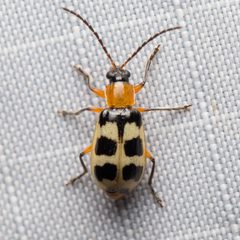
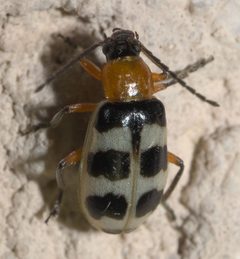
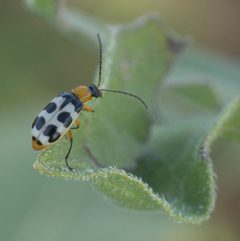
Paranapiacaba tricincta, commonly known as the checkered melon , is a of skeletonizing leaf beetle in the Chrysomelidae. The species is distributed across Central America and North America. have been observed in numbers on Cucurbita foetidissima (buffalo gourd) in shortgrass prairie of northeastern New Mexico.
Pronunciation
How to pronounce Paranapiacaba tricincta: //ˌpærənæpiˈækəbə traɪˈsɪŋktə//
These audio files are automatically generated. While they are not always 100% accurate, they are a good starting point.
Images
Habitat
Shortgrass prairie and associated riparian open woodlands with pinyon-juniper-oak vegetation. Observed in areas with standing water or moist conditions near water tanks and ponds.
Distribution
Central America and North America. Specifically documented from northeastern New Mexico (Kiowa National Grassland, Harding County) in the United States.
Seasonality
Active in late June to early July based on field observations. observed in mid-summer during warm conditions.
Diet
feed on Cucurbita foetidissima (buffalo gourd, also known as gourd or coyote melon). The name "checkered melon " suggests association with cucurbit .
Host Associations
- Cucurbita foetidissima - ADULT_FEEDING observed swarming this plant in numbers
Behavior
have been observed swarming vegetation in numbers. The appears to be strongly attracted to flowering or fruiting Cucurbita foetidissima.
Ecological Role
Leaf-feeding beetle that skeletonizes foliage of plants. may cause significant defoliation of cucurbit hosts.
Human Relevance
Potential agricultural pest on cucurbit crops given association with Cucurbita. suggests historical recognition as a melon pest.