
Paranapiacaba
J. Bechyné, 1958
Species Guides
2- Paranapiacaba connexa(Twin-Shield Leaf Beetle)
- Paranapiacaba tricincta(Checkered Melon Beetle)
Paranapiacaba is a of skeletonizing leaf beetles and flea beetles in the Chrysomelidae. The genus contains at least two described . The name is derived from Tupi-Guarani, meaning 'where you will find the sea' or 'a place to view the sea,' and is also the name of a historic railway town and forested mountain region in southeastern Brazil.
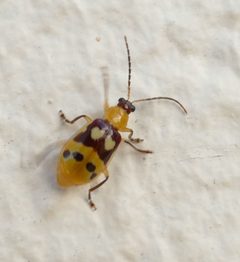
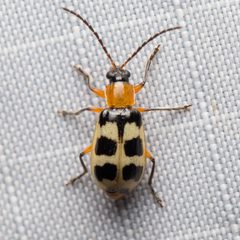
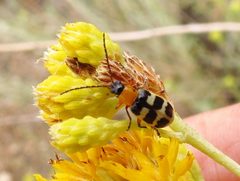
Pronunciation
How to pronounce Paranapiacaba: /ˌpæ.rəˌnæ.pɪˈæk.ə.bə/
These audio files are automatically generated. While they are not always 100% accurate, they are a good starting point.
Images
Distribution
The name references Paranapiacaba, a district in Santo André, São Paulo state, Brazil, located in the Serra do Mar coastal forests. The type locality is presumably in this Atlantic Forest region of southeastern Brazil.
Diet
As members of Chrysomelidae, in this are herbivorous. The 'skeletonizing leaf beetles' refers to their feeding habit of consuming leaf tissue between the , leaving a skeletonized appearance.
More Details
Etymology
The name derives from the Tupi-Guarani phrase meaning 'where you will find the sea' or 'a place to view the sea,' referring to the mountain village of Paranapiacaba in São Paulo state, Brazil, which sits at high elevation with views toward the Atlantic coast.
Taxonomic note
The name Paranapiacaba has been applied to multiple due to its geographic significance, including a spider (Metagonia paranapiacaba) and as a place name for a historic railway town and biological reserve. The was established by J. Bechyné in 1958.
Sources and further reading
- BugGuide
- Wikipedia
- GBIF taxonomy match
- iNaturalist taxon
- NCBI Taxonomy
- Catalogue of Life
- Eumastacidae | Beetles In The Bush
- Non-volant mammals of Carlos Botelho State Park, Paranapiacaba Forest Continuum
- Cactaceae from Reserva Biológica do Alto da Serra de Paranapiacaba, Santo André, São Paulo State, Brazil