
Trirhabda nitidicollis
LeConte, 1865
Rabbitbrush Beetle, Rabbitbrush Leaf Beetle
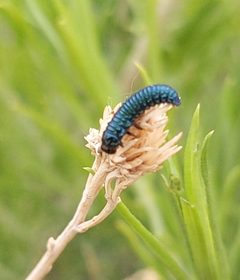
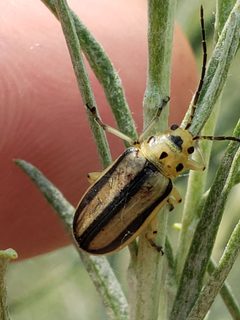
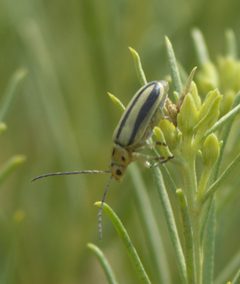
Trirhabda nitidicollis is a of skeletonizing leaf beetle in the Chrysomelidae. It is found in western North America, where feed on rabbitbrush (Ericameria nauseosa). The species is commonly encountered in pinyon-juniper woodland during summer months.
Pronunciation
How to pronounce Trirhabda nitidicollis: //traɪˈræbdə nɪˌtɪdɪˈkɒlɪs//
These audio files are automatically generated. While they are not always 100% accurate, they are a good starting point.
Identification
Images
Habitat
Pinyon-juniper woodland and adjacent shrublands, particularly areas with abundant rabbitbrush (Ericameria nauseosa).
Distribution
Western North America, including Arizona, Utah, Colorado, and surrounding regions.
Seasonality
are active in summer, with records from late June through July.
Diet
feed on foliage of Ericameria nauseosa (rabbitbrush), skeletonizing the leaves by consuming tissue between the .
Host Associations
- Ericameria nauseosa - primary plant feed on foliage; larvae presumably feed on roots or lower stems
Ecological Role
Herbivore that may influence rabbitbrush through foliage consumption.
Similar Taxa
- Trirhabda canadensisSimilar size and coloration, but associated with different plants in more northern and eastern ranges
- Other Trirhabda speciesRequire careful examination of elytral punctation, pronotal shape, and male genitalia for separation