
Systena hudsonias
(Forster, 1771)
black-headed flea beetle, Black-headed Systena
Systena hudsonias is a flea beetle (Chrysomelidae: Alticini) native to North America. are herbivorous and have been documented feeding on at least nine plant , including Asteraceae such as sunflowers (Helianthus annuus) and giant ragweed (Ambrosia trifida). The species is considered , though specific larval associations remain poorly documented. It is occasionally noted in agricultural contexts where sunflowers are cultivated.
Pronunciation
How to pronounce Systena hudsonias: /sɪˈstiː.nə hʌdˈsoʊ.ni.əs/
These audio files are automatically generated. While they are not always 100% accurate, they are a good starting point.
Identification
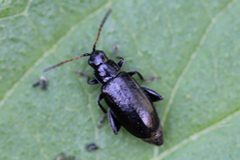
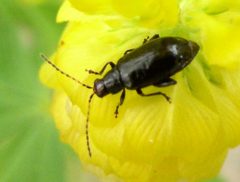
Systena hudsonias can be distinguished from the similar Palestriped Flea Beetle (Systena blanda) by its darker coloration with a black , as suggested by its . Systena blanda exhibits pale longitudinal stripes and is associated with similar plants including sunflower. Definitive separation of Systena typically requires examination of genitalic characters.
Images
Habitat
Found in areas supporting its diverse plants, including open fields, roadsides, and agricultural settings where Asteraceae and other host occur. Specific microhabitat preferences are not well documented.
Distribution
North America. Documented from southwestern Virginia with specific plant observations. Distribution records include Canadian provinces: Manitoba, New Brunswick, and Ontario.
Diet
Herbivorous. feed on foliage of at least nine documented plants across multiple : Ambrosia trifida (Asteraceae), Arctium minus (Asteraceae), Aster novae-angliae (Asteraceae), Chrysanthemum maximum (Asteraceae), Eupatorium fistulosum (Asteraceae), Helianthus annuus (Asteraceae), Rudbeckia hirta (Asteraceae), Mentha spicata (Lamiaceae), and Verbena urticifolia (Verbenaceae). Described as , feeding on plants from seventeen families overall. Larval diet unknown.
Host Associations
- Ambrosia trifida - feedinggiant ragweed
- Arctium minus - feedingcommon burdock
- Aster novae-angliae - feedingNew England aster
- Chrysanthemum maximum - feedingShasta daisy
- Eupatorium fistulosum - feedinghollow Joe-Pye weed
- Helianthus annuus - feedingcommon sunflower
- Rudbeckia hirta - feedingblack-eyed Susan
- Mentha spicata - feedingspearmint
- Verbena urticifolia - feedingwhite vervain
Behavior
have been observed feeding on plant foliage. Like other flea beetles, possesses enlarged hind enabling jumping escape response when disturbed.
Ecological Role
herbivory contributes to foliar damage on plants. Specific role in dynamics, including larval contributions, has not been documented.
Human Relevance
Occasionally associated with sunflower ; feed on sunflower leaves. Economic significance appears minor compared to more damaging sunflower such as Zygogramma exclamationis or stem-boring beetles.
Similar Taxa
- Systena blandaSimilar size, plant associations including sunflower, and geographic range. Distinguished by palestriped pattern versus black of S. hudsonias.