
Systena blanda
Melsheimer, 1847
palestriped flea beetle, Brown-necked Systena
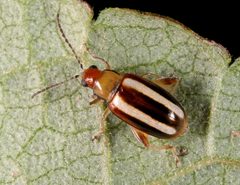
Systena blanda is a small flea beetle in the Chrysomelidae, commonly known as the palestriped flea beetle. measure 3–4 mm and are agricultural pests of young sunflowers and other crops. The has a broad geographic range spanning Central America, North America, and Oceania. Adults overwinter and emerge in late spring, feeding on leaf tissue and creating distinctive lace-like feeding damage.
Pronunciation
How to pronounce Systena blanda: //sɪsˈtiː.nə ˈblæn.də//
These audio files are automatically generated. While they are not always 100% accurate, they are a good starting point.
Identification
are 3–4 mm in length. The "palestriped flea beetle" suggests pale longitudinal striping on the , though specific pattern details are not documented in available sources. As a member of the flea beetle tribe Alticini, it possesses enlarged hind adapted for jumping. Distinguishing S. blanda from requires examination of subtle morphological characters not covered in general sources.
Images
Habitat
Associated with agricultural and natural where plants occur. Documented on sunflower (Helianthus spp.) stands and crop fields.
Distribution
Central America; North America; Oceania. GBIF records confirm presence in Middle America, North America, and Oceania.
Seasonality
overwinter and emerge in late spring. Peak adult activity coincides with sunflower seedling establishment.
Diet
feed on leaves of young sunflowers and other plants, creating lace-like patterns of injury. The has a wide range including many crop plants. Larval feeding habits are unknown; larvae may feed on different host plants than adults.
Host Associations
- Helianthus annuus - herbivore feeding on leaves
- Helianthus spp. - herbivore feeding on young plants
Life Cycle
overwinter. and larval stages undescribed in available sources. details unknown. One per year inferred from adult pattern.
Behavior
are active leaf feeders during the growing season. Like other flea beetles, possesses jumping ability using enlarged hind legs. Overwinters as adults.
Ecological Role
Herbivore; agricultural pest of sunflower and other crops. Specific ecological role in native undescribed.
Human Relevance
Agricultural pest. damage young sunflower leaves, reducing plant vigor. Listed among sunflower pests in guides for the Northern Great Plains.
Similar Taxa
- Systena spp.congeneric flea beetles with similar size and general ; require detailed examination to distinguish
- Zygogramma exclamationisboth are chrysomelid leaf beetles feeding on sunflower; Z. exclamationis is larger (6–12 mm) and has distinctive elytral patterning with black and yellow/orange markings