
Sphaeroderma
Stephens, 1831
Species Guides
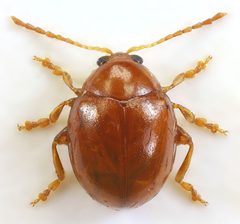
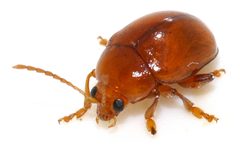
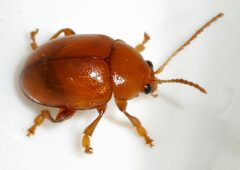
1- Sphaeroderma testaceum(artichoke beetle)
Sphaeroderma is a of flea beetles (Chrysomelidae: Galerucinae: Alticini) comprising approximately 250 distributed across the Old World. Members of this genus are small leaf beetles characterized by enlarged hind adapted for jumping. The genus has been subject to taxonomic revision, with new species continuing to be described from montane regions.
Pronunciation
How to pronounce Sphaeroderma: //sfɛəˈrɑdərmə//
These audio files are automatically generated. While they are not always 100% accurate, they are a good starting point.
Identification
Distinguished from other flea beetle by a combination of morphological features including body shape and genitalic structures; specific diagnostic characters vary among . Species-level identification requires examination of male genitalia and other subtle morphological traits. Some species exhibit distinctive color patterns that aid in field recognition.
Images
Habitat
Primarily associated with forested , including high-elevation montane forests. In Taiwan, have been collected at elevations between 2620-3320 meters in coniferous and mixed forests dominated by Chamaecyparis formosensis, Pinus taiwanensis, Tsuga chinensis var. formosana, and Abies kawakamii, with diverse understory vegetation.
Distribution
Old World distribution with approximately 250 . Documented from Taiwan (Shei-Pa National Park and southern regions), with broader distribution across Asia and other Old World regions.
Similar Taxa
- Other Alticini generaMany flea beetle share the enlarged hind characteristic of the tribe; Sphaeroderma is distinguished by specific combinations of morphological features including body form and genitalic structure.
More Details
Taxonomic history
The boundaries of Sphaeroderma have been discussed in recent taxonomic literature, particularly in relation to such as S. flavonotatum. Four new species were described from Taiwan in 2023, highlighting ongoing revisionary work.
Collection methods
Specimens have been collected using in high-elevation montane environments, suggesting activity in forest or understory strata.