
Neocrepidodera ferruginea
(Scopoli, 1763)
European rusted flea beetle, Altise ferrugineuse européenne
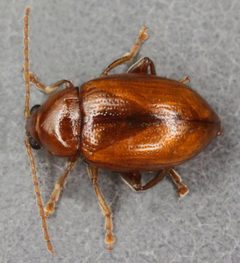
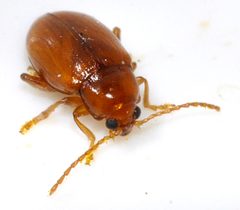
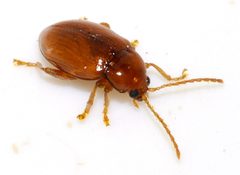
Neocrepidodera ferruginea is a flea beetle in the Chrysomelidae, native to Europe and introduced to North America. are brown in color and feed on a variety of herbaceous plants, particularly grasses and composites. The inhabits meadows and grasslands, and has been recorded from numerous plants including Poaceae, Asteraceae, and various weeds. Larvae develop within roots and central stems of host plants. In North America, it was first documented in Ontario and Québec in the 1970s and has since spread northeastward, where it is considered a potential agricultural pest.
Pronunciation
How to pronounce Neocrepidodera ferruginea: /niːoʊˌkɹɛpɪˈdoʊɹə ˌfɛɹuːˈdʒɪniə/
These audio files are automatically generated. While they are not always 100% accurate, they are a good starting point.
Identification
Small brown flea beetle distinguished from related by coloration and associations. In North America, identification should be confirmed by comparison with native Neocrepidodera species and other brown alticine beetles. The species was first documented in North America through specimens from Niagara Falls, Ontario (1977) and Aylmer, Québec (2003).
Images
Habitat
Meadows, grasslands, and open herbaceous areas. In North America, found in both wild and cultivated areas including grasslands and agricultural fields.
Distribution
Native to Europe, where it occurs across the entire continent. Introduced to North America: first recorded in southern Ontario (likely 1970s or possibly 1960s), with confirmed specimens from Niagara Falls (1977) and subsequent spread to Aylmer, Québec (by 2003). Also recorded from the Azores (São Miguel, Santa Maria).
Diet
feed on leaves and flowers of various herbaceous plants including grasses (Poaceae) and composites (Asteraceae). Recorded plants include Alopecurus pratense, Dactylis glomerata, Festuca rubra, Poa pratensis, Aster spp., Solidago spp., and various other weeds and cultivated plants.
Host Associations
- Alopecurus pratense - feedingmeadow foxtail
- Dactylis glomerata - feedingorchard-grass
- Festuca rubra - feedingred fescue-grass
- Poa pratensis - feedingKentucky blue-grass
- Aster spp. - feedingflowers
- Solidago spp. - feedinggoldenrods
- Cirsium - feeding
- Trifolium - feeding
- Urtica dioica - feedingstinging nettle
- Vicia - feeding
Life Cycle
Larvae develop inside roots and central stems of plants, including cereals. are active on above-ground vegetation. Specific details of and not documented in available sources.
Behavior
are active on vegetation and can be collected by sweeping. Jumping typical of flea beetles (Alticini), enabled by enlarged hind .
Ecological Role
Herbivore feeding on grasses and herbaceous plants. Preyed upon by various natural enemies including larvae of Ichneumonidae, Braconidae, and occasionally Pentatomidae.
Human Relevance
Considered a potential agricultural pest in North America, particularly threatening to cereal crops if it spreads to the Prairie provinces. Suggested were formally proposed upon its North American discovery: "European rusted flea beetle" (English) and "Altise ferrugineuse européenne" (French).
Similar Taxa
- Native Neocrepidodera species in North AmericaSimilar brown coloration and alticine ; requires careful examination to distinguish introduced N. ferruginea from native congenerics.
- Other brown AlticiniMany flea beetles share similar size and coloration; plant associations and geographic origin help distinguish this European introduction.
More Details
Introduction history to North America
Likely introduced at an international port on the Great Lakes in the early 1970s, or possibly earlier in the 1960s. Exact location and date of introduction could not be precisely determined. The has dispersed approximately 375 km northeastward from Niagara Falls to Aylmer, Québec over about 26 years (1977–2003).
Sources and further reading
- BugGuide
- Wikipedia
- GBIF taxonomy match
- iNaturalist taxon
- NCBI Taxonomy
- May | 2023 | Beetles In The Bush
- The bodyguard: Pseudomyrmex ants protecting bullhorn acacias — Bug of the Week
- Bug Eric: Wasp Wednesday: Ampulex canaliculata
- Bug of the Week
- First Record of the European Rusted Flea Beetle,Neocrepidodera ferruginea(Scopoli, 1763), in North America (Coleoptera: Chrysomelidae: Galerucinae: Alticini)