
Neocrepidodera
Heikertinger, 1911
Species Guides
2- Neocrepidodera ferruginea(European rusted flea beetle)
- Neocrepidodera robusta
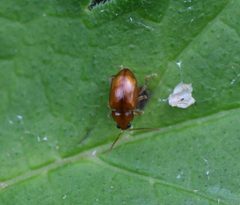
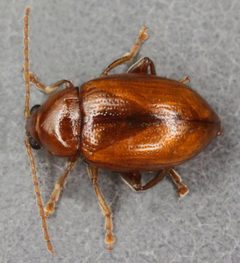
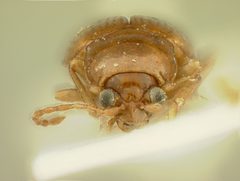
Neocrepidodera is a of flea beetles (Chrysomelidae: Galerucinae: Alticini) containing approximately 100 described distributed worldwide. Species occur primarily in the Western Palearctic, with many restricted to medium and high elevation mountain . are typically small, often exhibiting metallic or rusty coloration, and possess the enlarged hind characteristic of flea beetles that enable jumping. Several species have become established outside their native ranges, including N. ferruginea in North America.
Pronunciation
How to pronounce Neocrepidodera: /ˌniːoʊˌkrɛpɪˈdɛrə/
These audio files are automatically generated. While they are not always 100% accurate, they are a good starting point.
Identification
Members of Neocrepidodera can be distinguished from related flea beetle by genitalic characters, particularly the structure of the and spermatheca. Specific -level identification often requires examination of these internal structures. Body size ranges from approximately 3.5–5.5 mm in examined species. Coloration varies from metallic blue-green to orange, rusty red, or brown depending on species.
Images
Habitat
occupy diverse including open grassy areas, fens, saltmarshes, agricultural lands, parks, and gardens. Many Western Palearctic species are associated with medium and high elevation mountain . N. ferruginea has been recorded from both wild habitats and cultivated areas in its introduced North American range.
Distribution
Native distribution centered in the Western Palearctic, with widespread across Europe (except northern Scandinavia and Iceland for some species), extending to Anatolia, Cyprus, Azerbaijan, and Iran. Some species have narrow ranges, such as N. ligurica in the Western Alps. At least one species (N. ferruginea) has been introduced to North America, with established in Ontario and Québec, Canada.
Seasonality
of examined are active primarily from late June through October; some appear as early as April. Adults of N. transversa do not usually survive into winter.
Human Relevance
N. ferruginea, the European rusted flea beetle, represents a potential agricultural threat in North America. feed on various grasses including cultivated such as Alopecurus pratense, Dactylis glomerata, Festuca rubra, and Poa pratensis. Larvae are suspected to develop within roots and central stems of cereals, posing particular concern for cereal production if the species expands into western Canadian agricultural regions.
Similar Taxa
- CrepidoderaHistorically confused with Neocrepidodera; separated based on genitalic and other structural characters
- Other Alticini generaDistinguished by specific and spermatheca structure; external often insufficient for identification
More Details
Conservation concern
Climate change poses significant threat to high-elevation with narrow distributions. N. ligurica, N. cyanescens concolor, N. corpulenta, and N. rhaetica have been identified as potentially requiring prioritization measures due to projected loss of suitable .
Genomic resources
First sequence available for the : N. transversa assembly of 671.30 Mb with 93.58% scaffolded into 21 chromosomal pseudomolecules.
Sources and further reading
- BugGuide
- Wikipedia
- GBIF taxonomy match
- iNaturalist taxon
- NCBI Taxonomy
- First Record of the European Rusted Flea Beetle,Neocrepidodera ferruginea(Scopoli, 1763), in North America (Coleoptera: Chrysomelidae: Galerucinae: Alticini)
- The role of climate and biotic factors in shaping current distributions and potential future shifts of European Neocrepidodera (Coleoptera, Chrysomelidae)
- The genome sequence of a flea beetle, Neocrepidodera transversa (Marsham, 1802).