
Luperaltica
Crotch, 1873
Species Guides
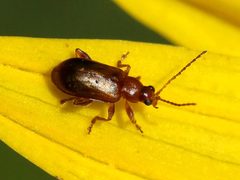
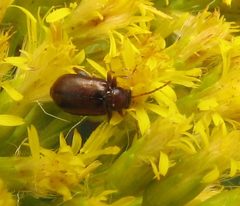
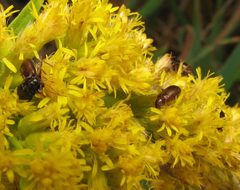
3Luperaltica is a of flea beetles (Chrysomelidae: Alticini) established by Crotch in 1873. The genus contains at least four described in North America, with additional species reported from Mexico. Like other flea beetles, members possess enlarged hind adapted for jumping. The genus is part of the diverse leaf beetle Chrysomelidae.
Pronunciation
How to pronounce Luperaltica: //ˌluːpɛrˈæltɪkə//
These audio files are automatically generated. While they are not always 100% accurate, they are a good starting point.
Identification
Members of Luperaltica can be distinguished from other flea beetle by genitalic characters, particularly male aedeagal . External features include the combination of small size (typical of flea beetles), compact body form, and antennal structure. Definitive identification to level requires examination of genitalia; external morphology alone is often insufficient due to similarity among .
Images
Distribution
North America, with at least four described (Luperaltica nigripalpis, L. nitida, L. semiflava, L. senilis); Mexico (additional undescribed or unlisted species).
Behavior
Possesses the saltatorial (jumping) ability characteristic of Alticini flea beetles, enabled by enlarged hind with extensor tendons that store and release elastic energy.
Similar Taxa
- AlticaBoth are flea beetle in tribe Alticini with similar external ; distinguished by genitalic features and subtle differences in antennal and pronotal structure.
- DisonychaAnother North American flea beetle ; Disonycha often show more contrasting color patterns and differ in male genitalia.
More Details
Taxonomic authority
established by George Robert Crotch in 1873.