
Hippuriphila
Foudras, 1859
Species Guides
3- Hippuriphila canadensis(Horsetail Flea Beetle)
- Hippuriphila equiseti
- Hippuriphila mancula
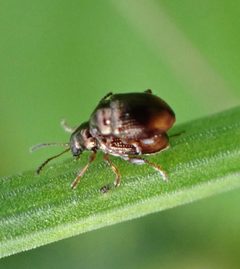
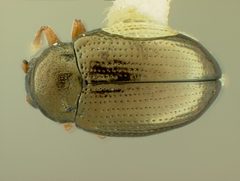
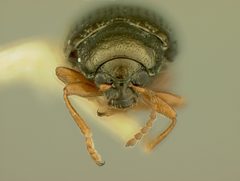
A of flea beetles in the Chrysomelidae containing three described distributed across the Nearctic and Palaearctic regions. The genus was established by Foudras in 1859. American specimens were historically misidentified as the Eurasian species H. adonidis until taxonomic revision established H. americana as a distinct species based on .
Pronunciation
How to pronounce Hippuriphila: /hɪˌpjʊrɪˈfaɪlə/
These audio files are automatically generated. While they are not always 100% accurate, they are a good starting point.
Identification
American distinguished from the Eurasian H. adonidis by and slight differences in coloration and surface . Specific diagnostic characters for the as a whole are not documented in available sources.
Images
Distribution
Nearctic and Palaearctic regions. GBIF records confirm presence in Denmark, Norway, and Sweden. The American H. americana occurs in North America, while H. adonidis is distributed from southern France and Germany to Persia and southern Siberia; no evidence supports continuous distribution between these regions.
Similar Taxa
- EntomoscelisHistorically confused with Hippuriphila; American specimens of Hippuriphila were previously misidentified under Entomoscelis adonidis before taxonomic revision clarified their distinct status.
Misconceptions
American specimens were long misidentified as the Eurasian Hippuriphila adonidis (or placed in Entomoscelis as E. adonidis); they represent a distinct , H. americana, based on morphological differences in male genitalia.
More Details
Taxonomic history
Authors followed Kirby in referring American specimens to the Eurasian adonidis until Brown's 1942 revision established H. americana as a new . The contains three described species: H. canadensis, H. equiseti, and H. modeeri (the latter including H. mancula as a synonym).