
Altica subplicata
LeConte, 1859
willow leaf beetle
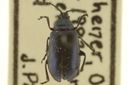
Altica subplicata, commonly known as the willow , is a flea beetle that feeds exclusively on willows (Salix spp.). It occurs across much of North America from southern Texas to southern Canada. Both larval and stages feed on plant leaves, and the exhibits on individual plants. Heavy herbivory can significantly reduce host plant growth, increase mortality, and influence sand dune patterns.
Pronunciation
How to pronounce Altica subplicata: /ˈæltɪkə sʌbplɪˈkeɪtə/
These audio files are automatically generated. While they are not always 100% accurate, they are a good starting point.
Images
Habitat
Distribution
Ranges from southern Texas to southern Canada, spanning from British Columbia to Quebec. Documented from Lake Huron shoreline, Missouri, and sand dune across this broad North American range.
Diet
herbivore feeding on Salix . Both larvae and consume leaves of the plant.
Host Associations
- Salix cordata - primary sand dune willow; primary for feeding and
- Salix - -level association documented
Life Cycle
Includes larval and stages. Larvae feed on plant foliage. occurs in soil, with soil moisture influencing pupation . No larvae were found on foliage in one field observation despite heavy adult feeding, suggesting larvae may feed on roots or pupate in soil.
Behavior
Exhibits on individual plants based on presence of conspecifics. Mark-recapture experiments show higher rates on plants already containing beetles compared to plants where beetles were removed. Sex does not influence colonization behavior; both males and females colonize plants regardless of sex of beetles already present. Does not aggregate at larger spatial containing many host plants.
Ecological Role
Acts as an engineer affecting sand dune . Heavy herbivory reduces growth, , and survival of Salix cordata, leading to increased plant mortality and potential local extinction of willow patches. This reduces dune stabilization by willows and alters vegetation structure, facilitating increases in herbaceous plants and decreases in other woody plants, thereby influencing successional dynamics.
Similar Taxa
- Other Altica speciesLarge, diverse ; A. subplicata distinguished by association with willow , though other willow-associated may exist within its range
More Details
Research significance
This has been extensively studied for its effects on plant and dynamics, particularly in sand dune systems where its herbivory on Salix cordata can alter -level patterns over multi-year periods.
Aggregation mechanism
The appears driven by presence rather than plant quality cues, representing a form of social facilitation in plant .
Sources and further reading
- BugGuide
- Wikipedia
- GBIF taxonomy match
- iNaturalist taxon
- NCBI Taxonomy
- Scarabaeidae | Beetles In The Bush | Page 3
- Effects of a Specialist Herbivore (Altica Subplicata) on Salix Cordata and Sand Dune Succession
- Effects of Microclimate and Plant Characteristics on the Distribution of a Willow Flea Beetle, Altica subplicata
- Aggregation Behavior of a Willow Flea Beetle, <i>Altica Subplicata</i> (Coleoptera: Chrysomelidae)
- Effects of Soil Moisture on the Pupation Behavior of <i>Altica Subplicata</i> (Coleoptera: Chrysomelidae)
- Between-Site Variation in Suitability of <i>Salix Cordata</i> as a Host for <i>Altica Subplicata</i> (Coleoptera: Chrysomelidae)